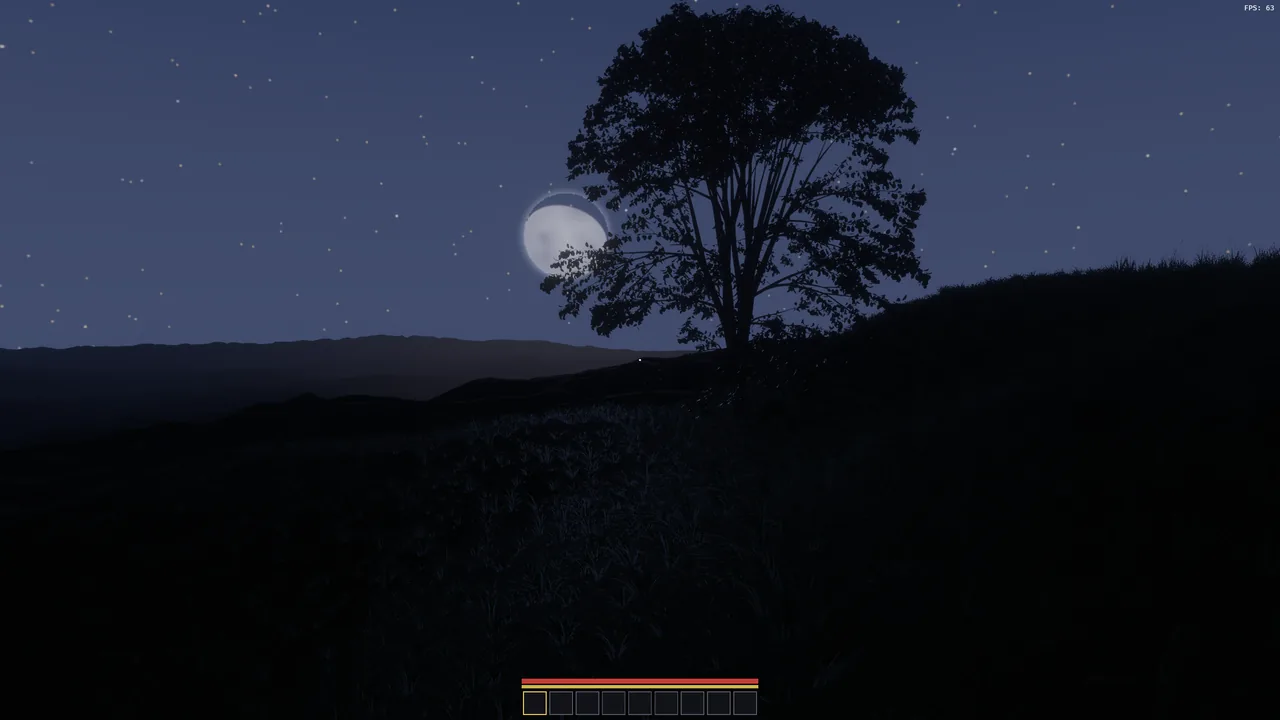
28 September 2026 · Hazmad
Preorders are open, and Early Access has a date
Big news first: Steadfall has a release date. Early Access is currently slated for October 1, 2027, and preorders are open right now.
Preorders
Preorders are live on the Steadfall Ko-fi page, in three tiers:
- Standard, $14.99
- Survivor, $29.99
- Steadfaller, $59.99
The price of the full game is set at a modest $29.99, the same as the Survivor tier. That makes the Standard preorder a discount on the game itself, for anyone getting in early.
Every tier reserves your username and gets you in on day one of Early Access. After you buy, you get an email with a link to claim your username and set up your steadfall.com account. If you want to move up a tier later, tip the difference on Ko-fi from the same email address and your preorder upgrades on its own. The Ko-fi page lists what each tier includes.
Ko-fi is only the first storefront. A Steam page and an itch.io page are both in the works, and there will be other platforms to buy a preorder copy of the game on as well. If you would rather wait for one of those, that is completely fine. Every preorder, wherever it is bought, supports development directly, and it means a lot to the two of us building this.
Modular guns
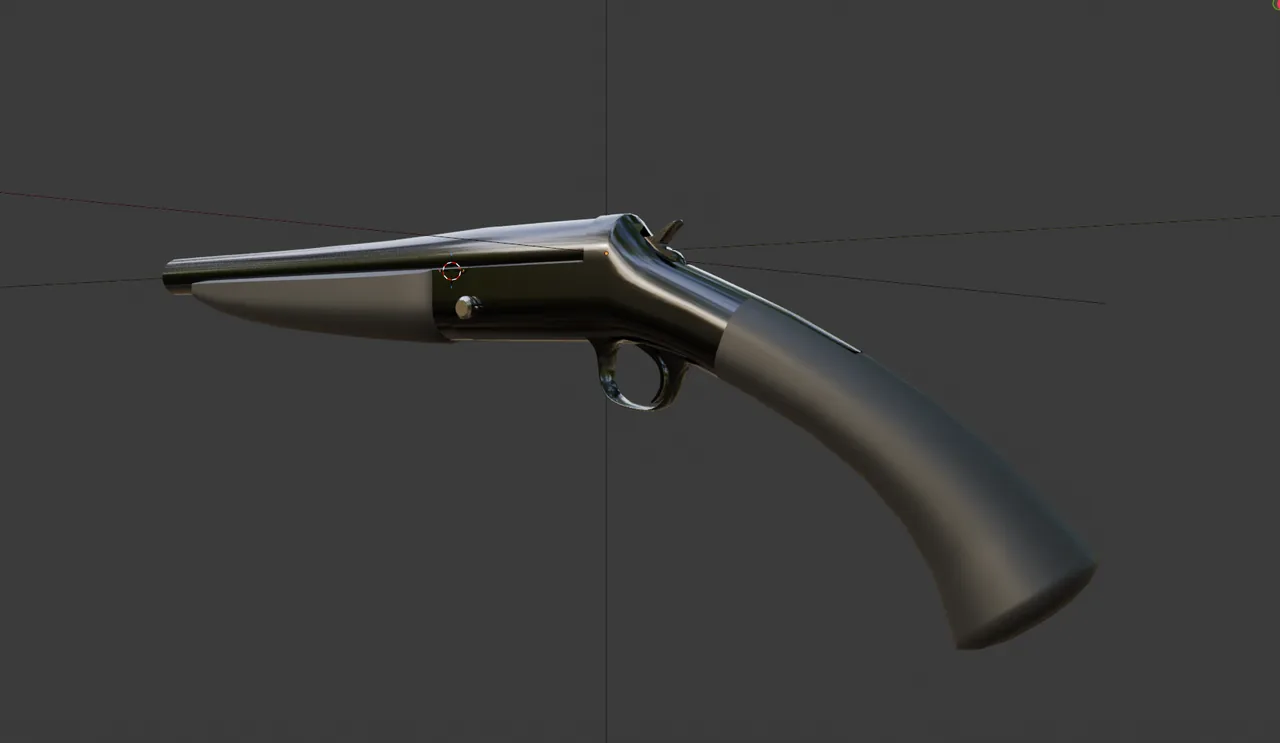
The first gun is modeled, and how guns will work is settled. Both came from Dragonfly9307.
Guns come in tiers of mechanical complexity. The first tier is a break action shotgun, and each tier above it is a more complex mechanism.
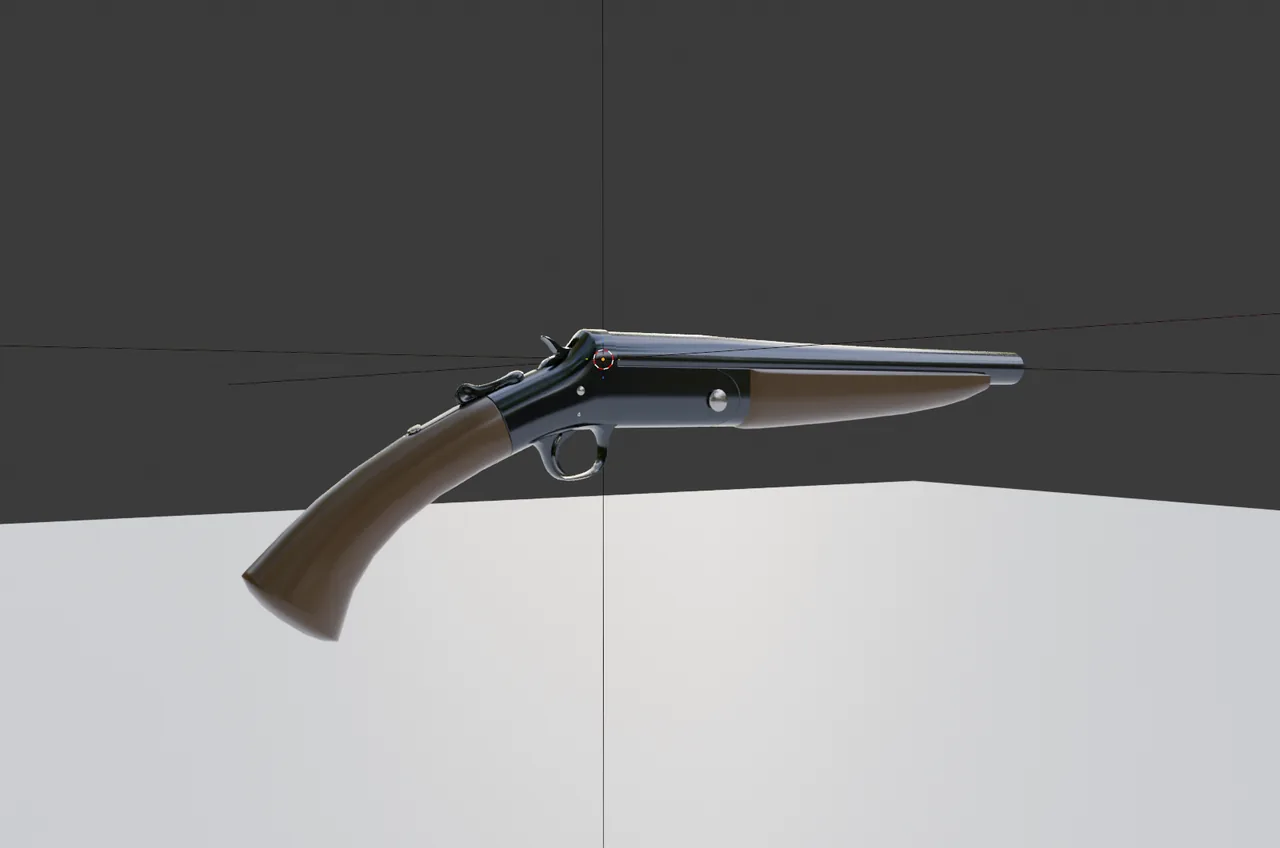
The receiver and barrel decide how good a gun is. They carry the refinement, so they are where accuracy comes from, and they belong to their tier.
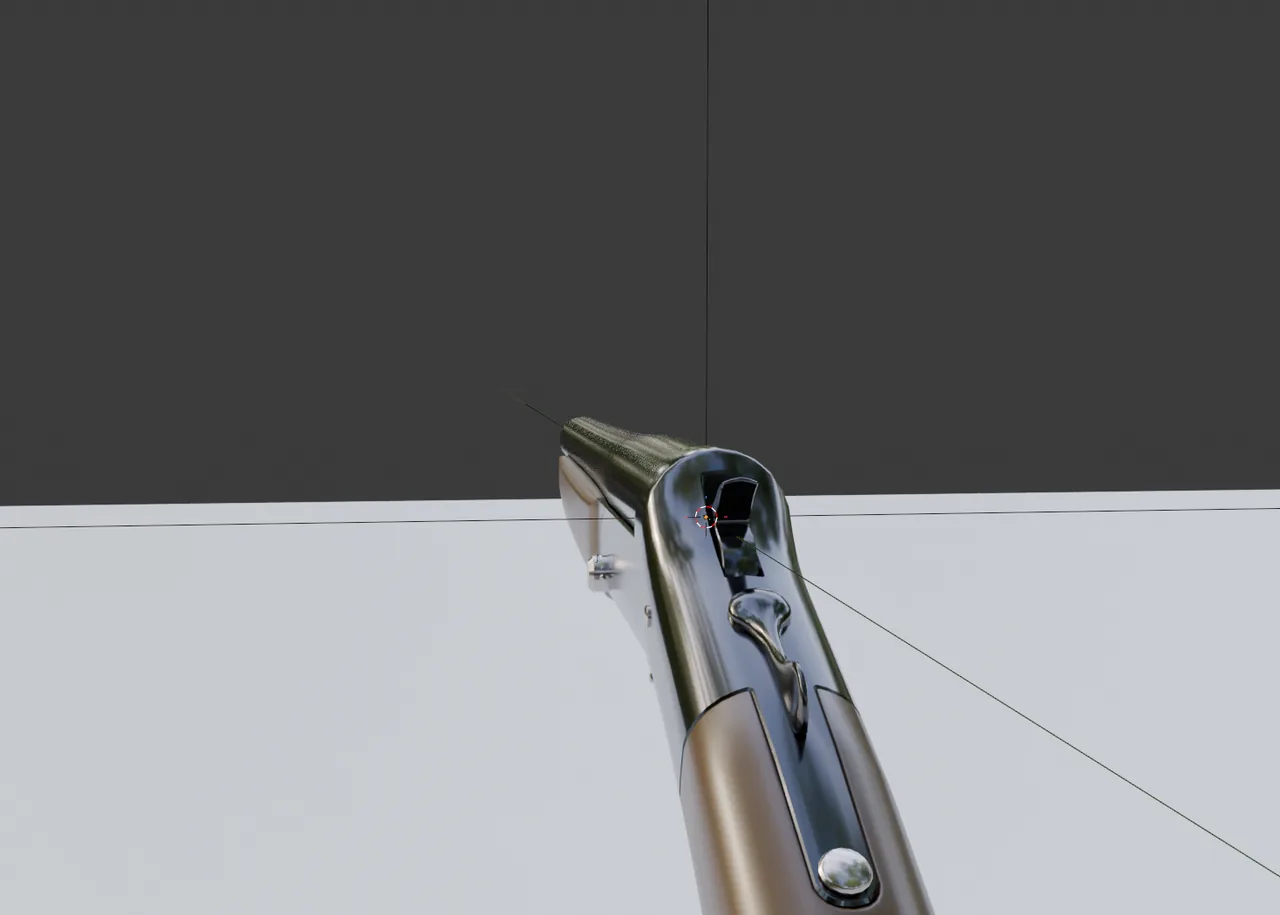
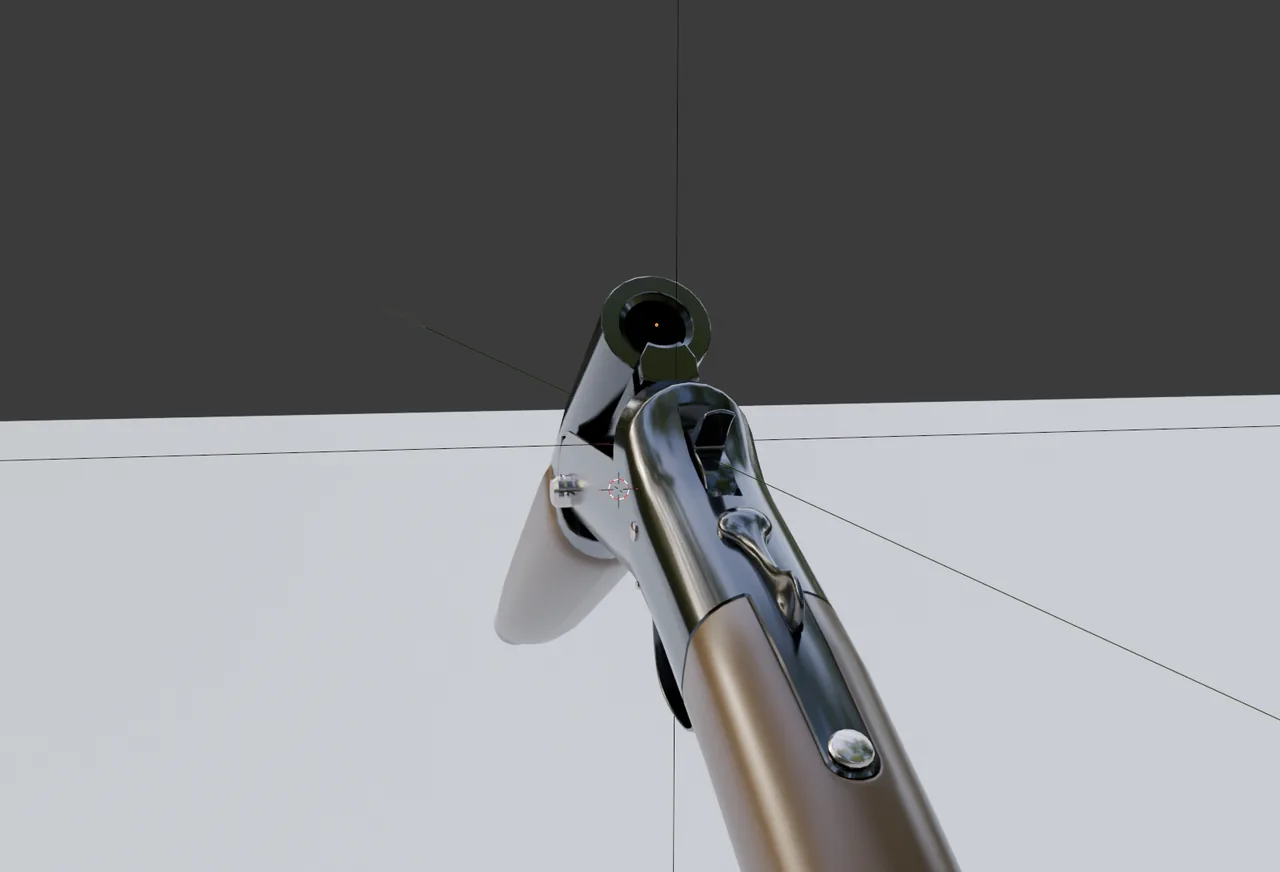
Everything else fits wherever the receiver allows. Stocks, grips and sights are as universal as they can be. A simple receiver takes only a few attachments, while a more complex one takes more of them and more kinds, like side rails for a laser. The lowest tier has no scope rail at all: a break action uses iron sights.
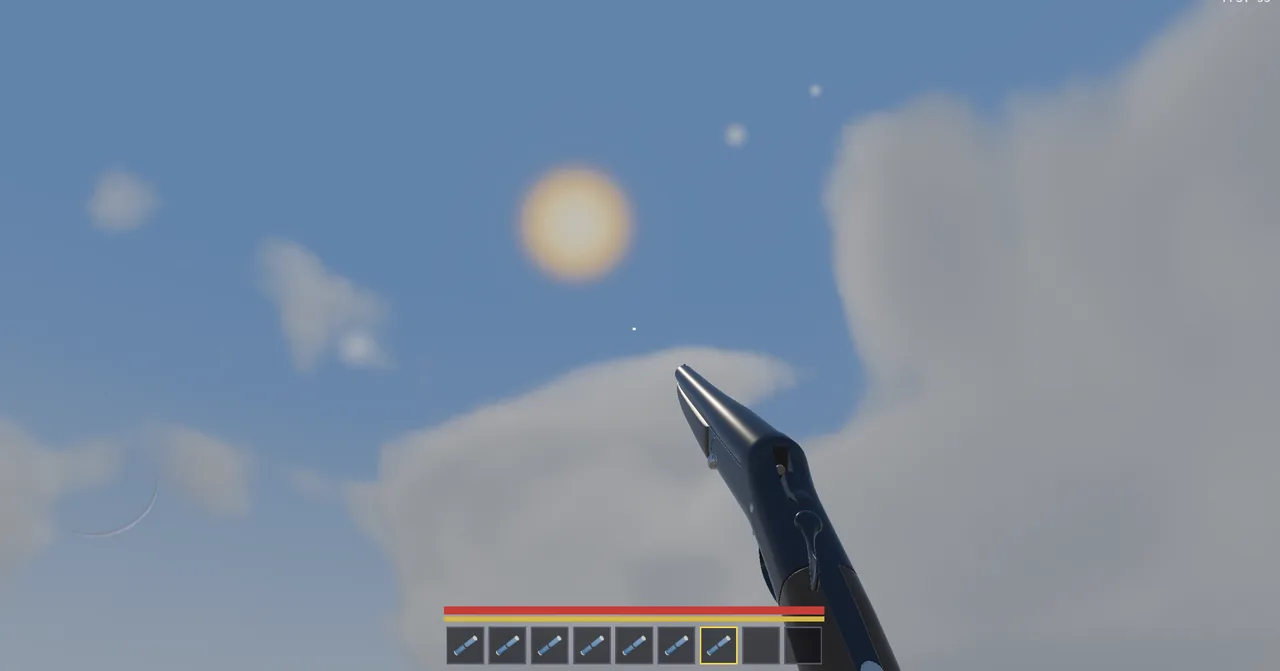
Parts are physical. A stock bolts on and comes off, and a break action with no stock is a shotgun pistol. Swapping the barrel changes the caliber. Sawing a barrel off is permanent: the gun gets shorter and lighter, spreads wider and loses accuracy, and the piece you cut off is scrap metal.
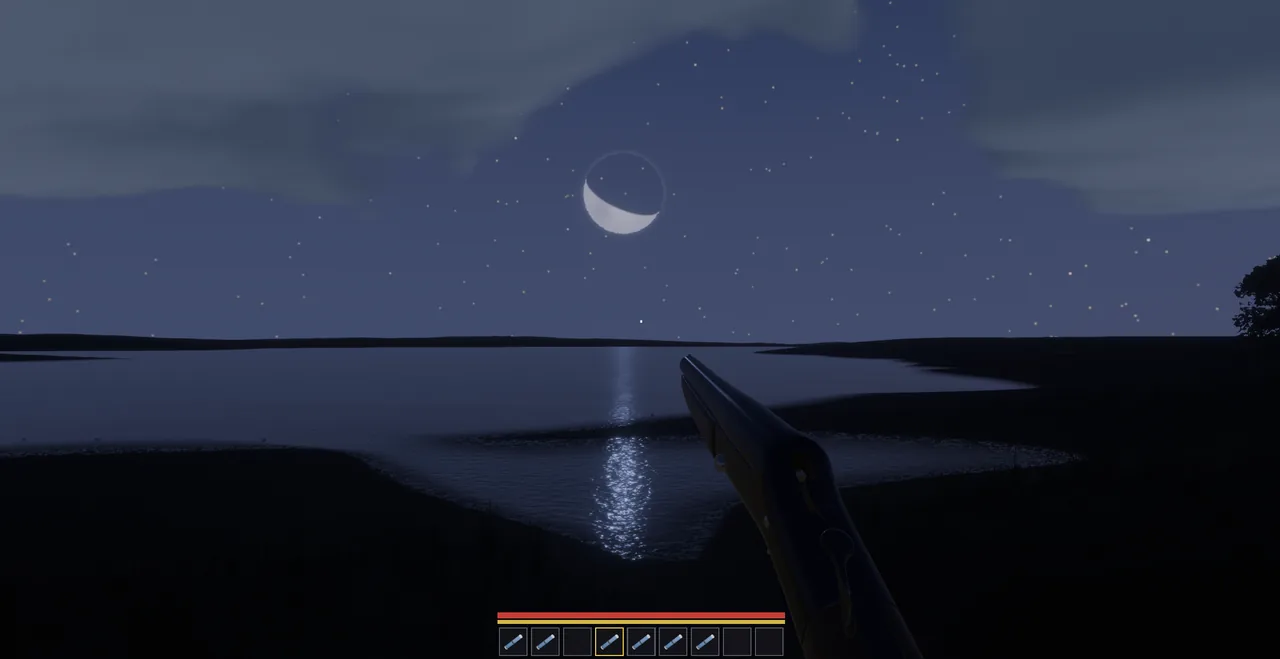
Frankenstein guns are allowed. You can build a gun out of parts from different tiers, and it will fire. It will also have serious drawbacks, so a mismatched gun is a stopgap or a gamble, never a shortcut.
Preorder finishes
Some preorder tiers include cosmetics, so here is exactly what you are buying.
A cosmetic in Steadfall is a finish, not a skin for one item. Own a finish and it applies to every item that could take it: tools, weapons, armor and your Scroll. That includes items added after you bought it, so a finish never goes out of date as the game grows.
The preorder finish is Tempered Tantrum. The Ko-fi page lists which tiers include it. Other finishes, like chrome, are in the works, and gold will be one of a kind, reserved for a single player.
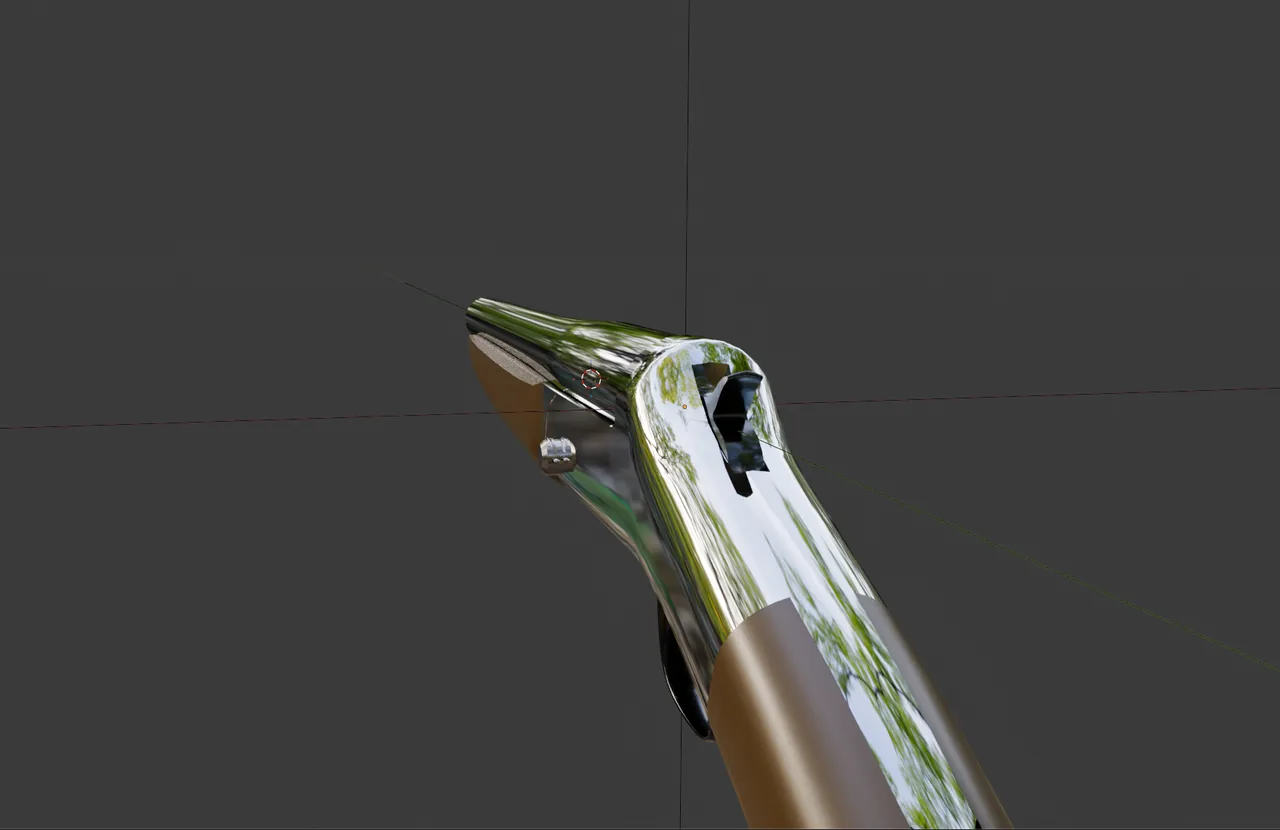
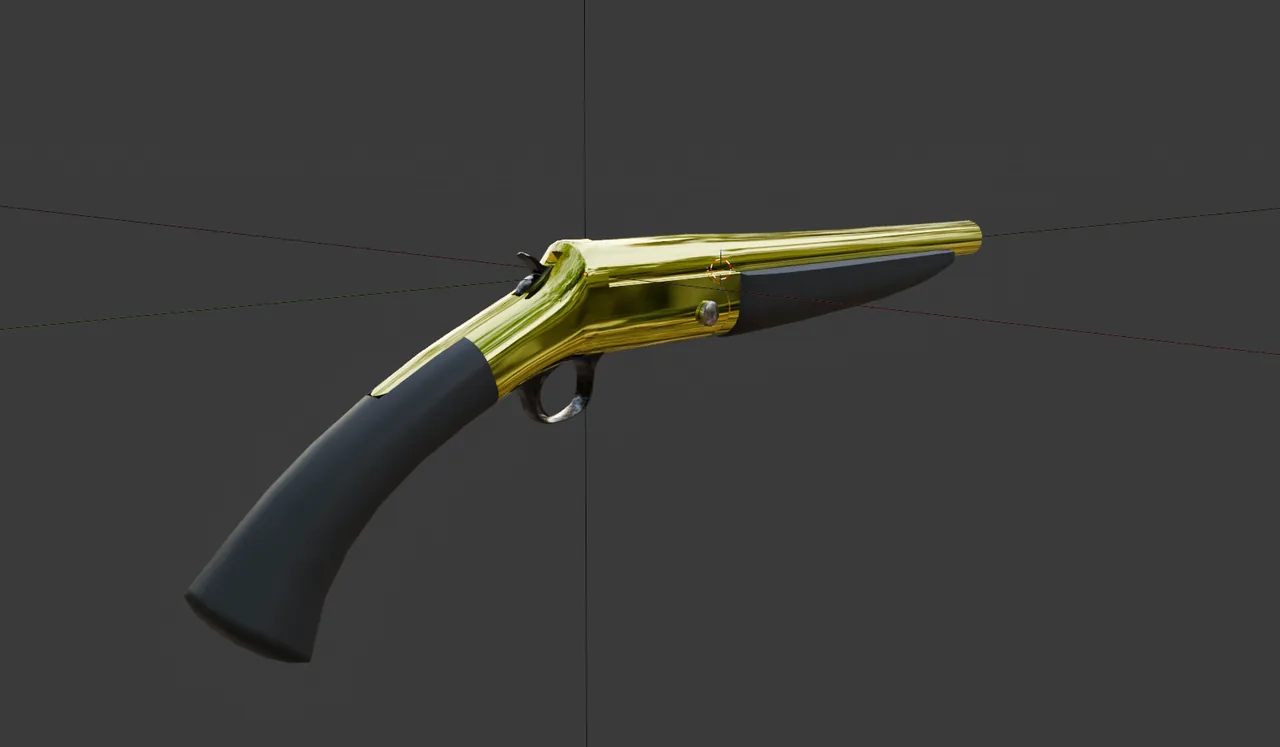
You apply a finish at a reskinning bench, to something you have already crafted, or you pick it while crafting. Any item with an alternate finish shows a swatch on its crafting tile.
A finish never implies anything about performance. No finish looks like a material the tech tree actually uses. Carbon fiber, for example, will never be a cosmetic, because a carbon fiber part is genuinely lighter and should look like it. If something looks better made, it is better made.
Exclusives stay exclusive. If a color is ever sold to everyone later, it will never be one a preorder finish already uses. Third person view (F5) means other players see your finishes too, not just you. And every supporter goes in the credits.
The Scroll
The biggest decision this fortnight is the Scroll. The model is finished and can already be held in game. This is how it will work.
Every player starts with a character, their clothes and one device: the Scroll. Dragonfly9307 modeled it and named it. It is a handheld tube with a screen that slides out of it, a light and a camera on one end, and room for one more module that pops out.
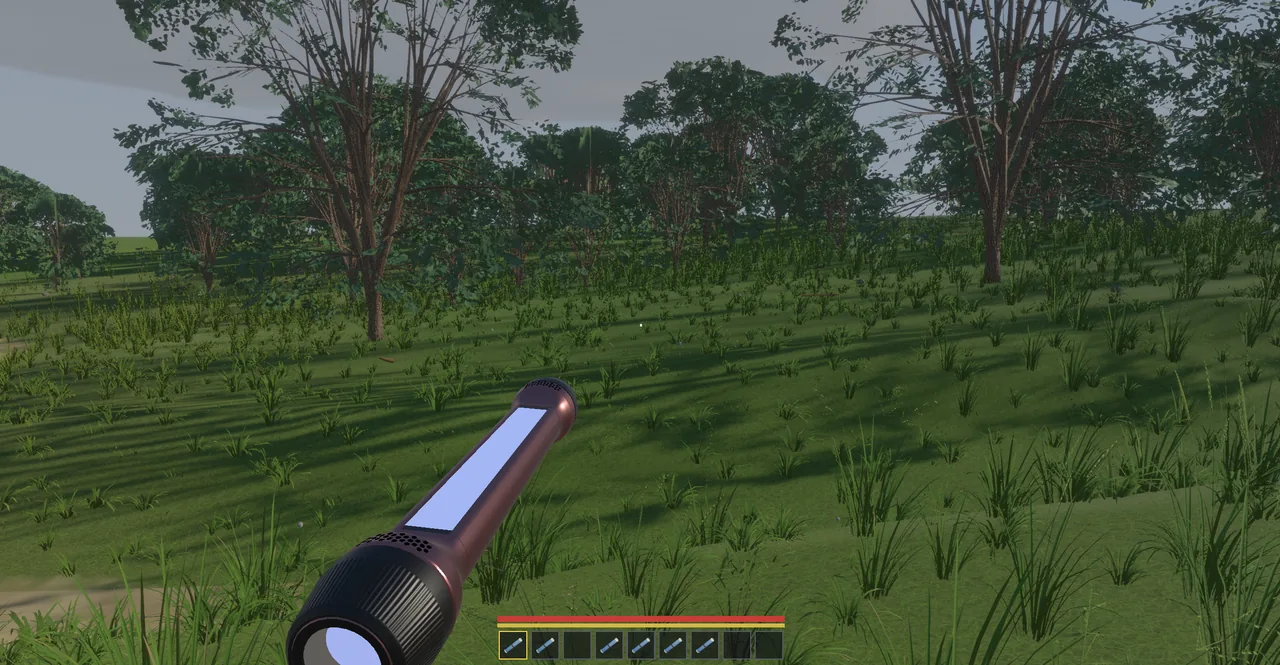
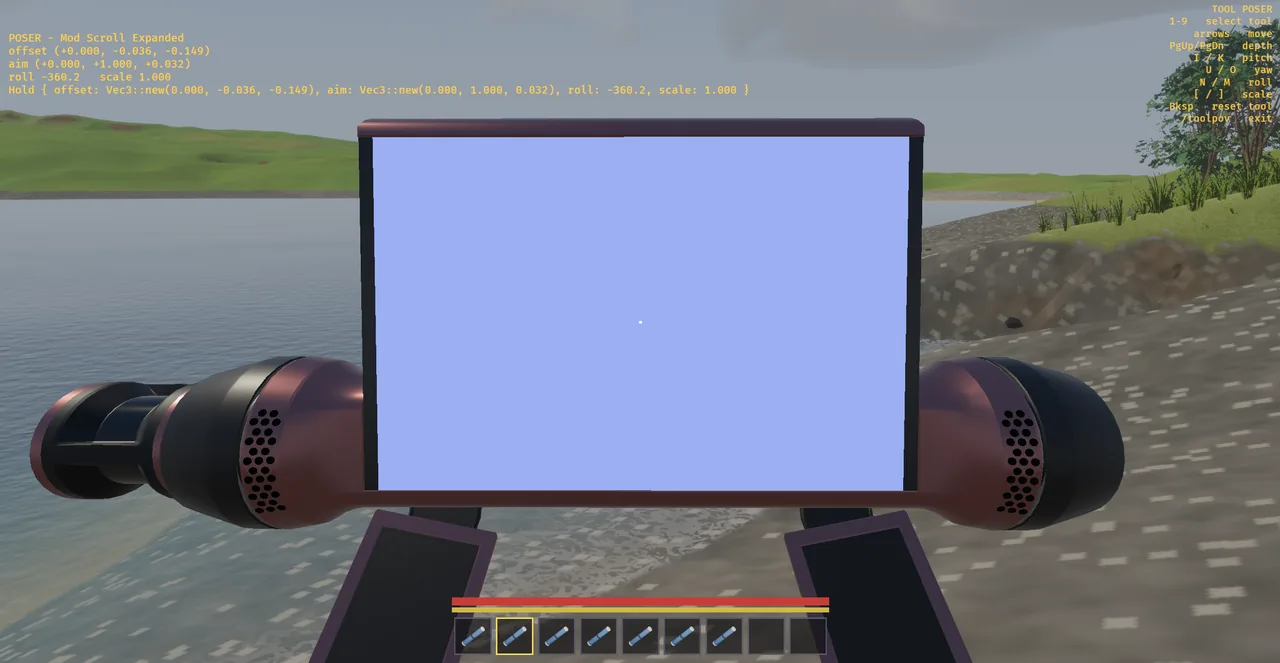
It is your guide. The Scroll carries a snapshot of human knowledge, survival advice and objectives to follow. You are never lost on what you can do, but deciding what you should do is still up to you. Early on it gives hints too, like where flint is usually found.
It lives in your left hand. That keeps your right hand free for tools and weapons. One handed items leave it where it is; a bow, or anything else that takes both hands, puts it away. When you are not using it, it is simply gone: no wrist strap, no necklace.
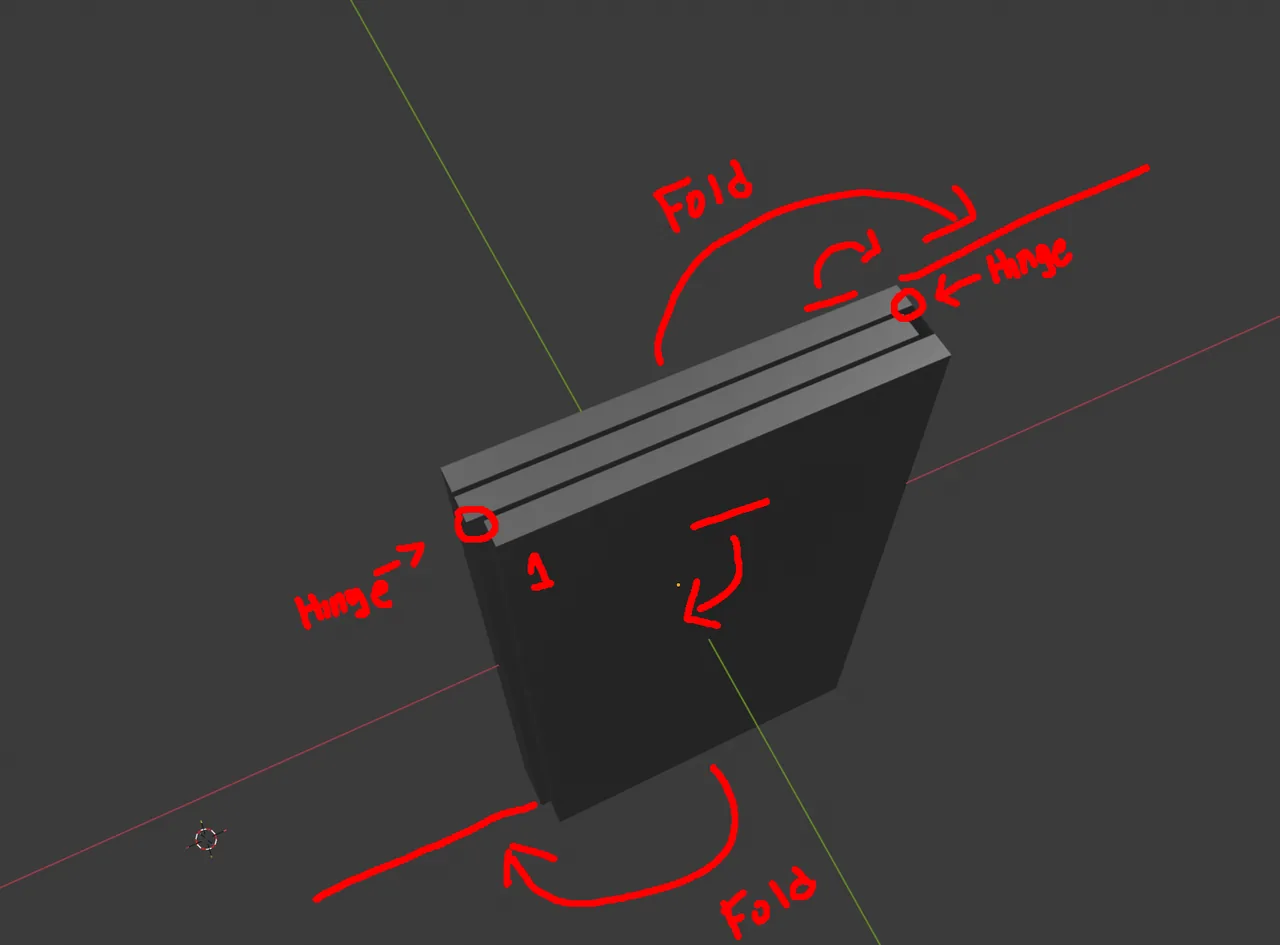
Every interface opens on it. Press Esc and your character raises the Scroll in both hands like a controller, and the menus, the build menu and the map all open on its screen. The screen is 3:2 rather than widescreen, because the Scroll is a device for lists, and the interface scales to fit your display. The first plan for this device was a tri folded tablet, a flat slab in three panels that unfolded on two hinges. It became the Scroll instead.
It is your toolkit. Middle mouse opens a utility wheel with a flashlight, a scanner, a camera and zoom. The flashlight is the Scroll's own light, the same one the camera flashes with, like a phone. For hands free light, you can clip it to one of three spots on your body.
It is how you talk. There are no cell towers on this planet. Messages go from Scroll to Scroll, so players close enough to each other can text, and you have to open the Scroll to read what arrives. A new message buzzes, and that buzz can give your position away. Reaching further means building antennas, and whoever owns an antenna can read everything that passes through it unless you encrypt.
It grows with you. The plan is for new features to install onto the Scroll as apps instead of arriving as new items, like a sample analyzer for minerals the camera cannot identify, or a short range resource scan. It is a starting device, not the ceiling: crafted lights, holders and mounts can outgrow it.
The tutorial is played on it. The first time you launch the game there is no menu. You are holding the Scroll, piloting a training character inside it through a guided survival course on a fixed map: find and scan flint, build a starting camp, make your first tools. Finish it and your character puts the Scroll down, the splash plays, the menu comes up, and the full size of the game arrives all at once. You can skip it from the Esc menu, and replay it any time from the Scroll.
The short version: the game got a lot faster, the water was rewritten from scratch, grass came back as real modeled clumps, and the first hand modeled tree is growing across the world.
Frame rate
A lot of this stretch went into performance, and it paid off. The biggest find was the clouds. The cloud pass turned out to be the most expensive thing in the entire frame, and none of our tools were timing it, so for months the game looked like it was waiting on the CPU when it was really waiting on the sky. Once we could see it, the clouds were reworked to spread their work across several frames and look identical doing it. At 4K, walking through the world went from 74 fps to a median of 116, and the worst frame dropped from 59 ms to 19 ms.
That same hunt also fixed a rare crash where the graphics driver would lock up and take the game down with it.
Smaller wins came from all over: the settings screen was quietly redrawing 44 text labels every single frame even while closed, loading far terrain got much cheaper, and cave meshes far below you are no longer built while you stand in a field. There is also a new Render Scale setting (100, 85, 75, 67 and 50%) that draws the world at a lower resolution while keeping the interface sharp, which is a big help on weaker hardware.
A few quality of life fixes came along with it: fullscreen is a proper setting now, F11 works from the main menu, and alt tabbing out of the game releases your mouse.
New water
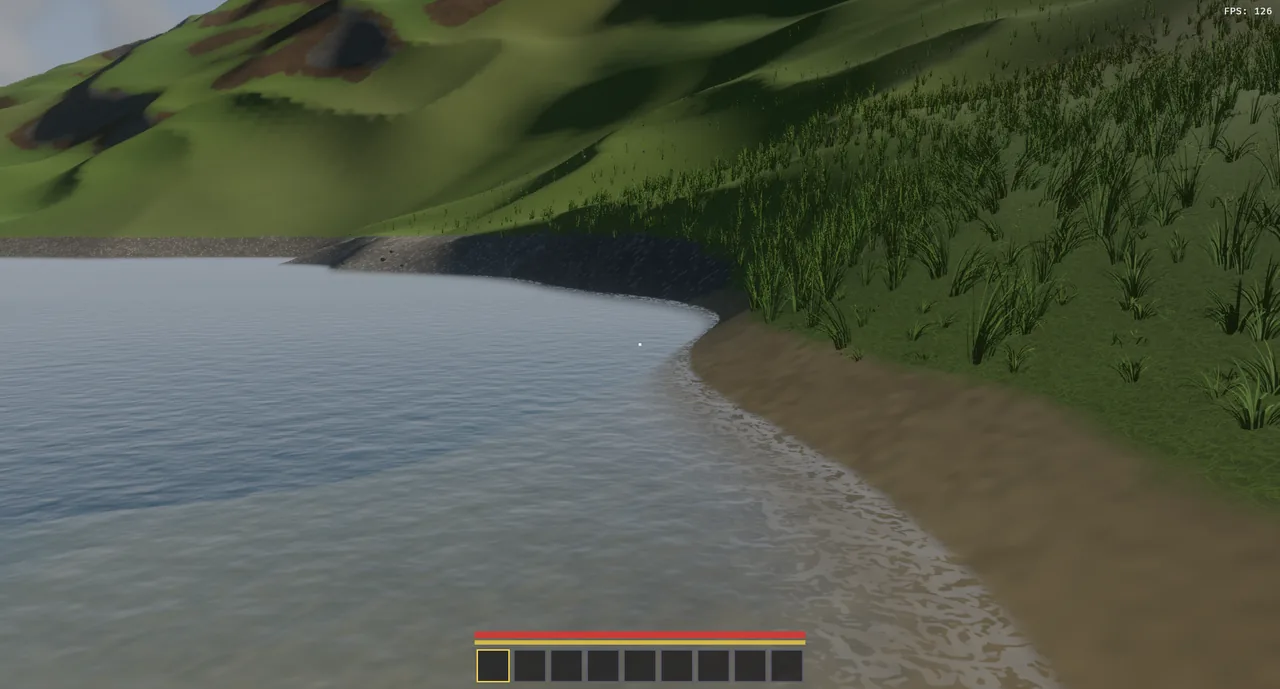
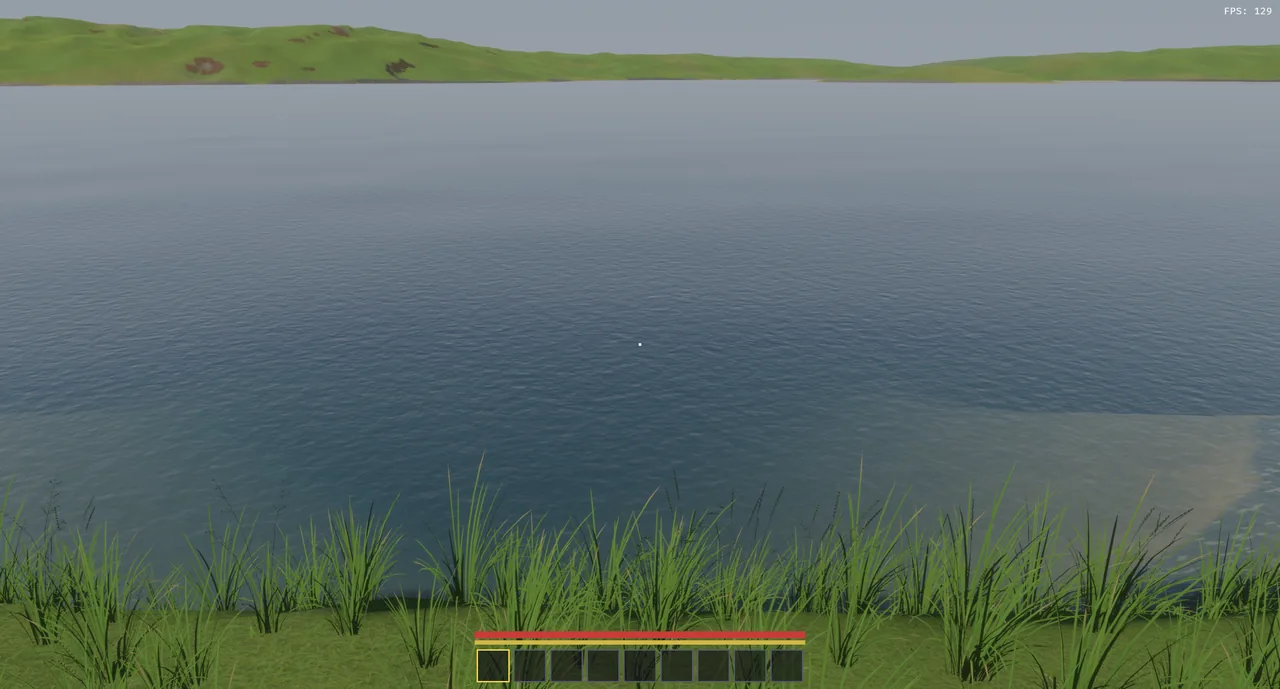
The water was rebuilt from the ground up. Before, the sea could not show what was under it at all. Now you can see the bed through shallow water, and it fades into deep color the further down it goes.
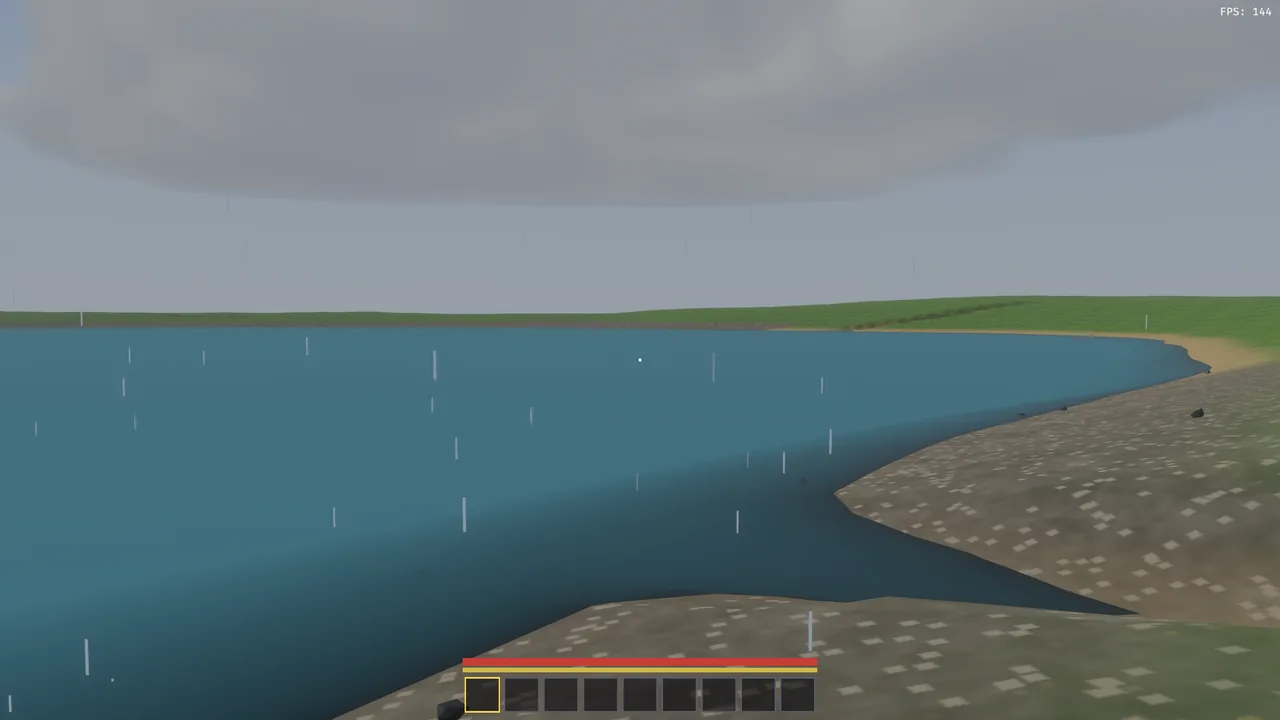
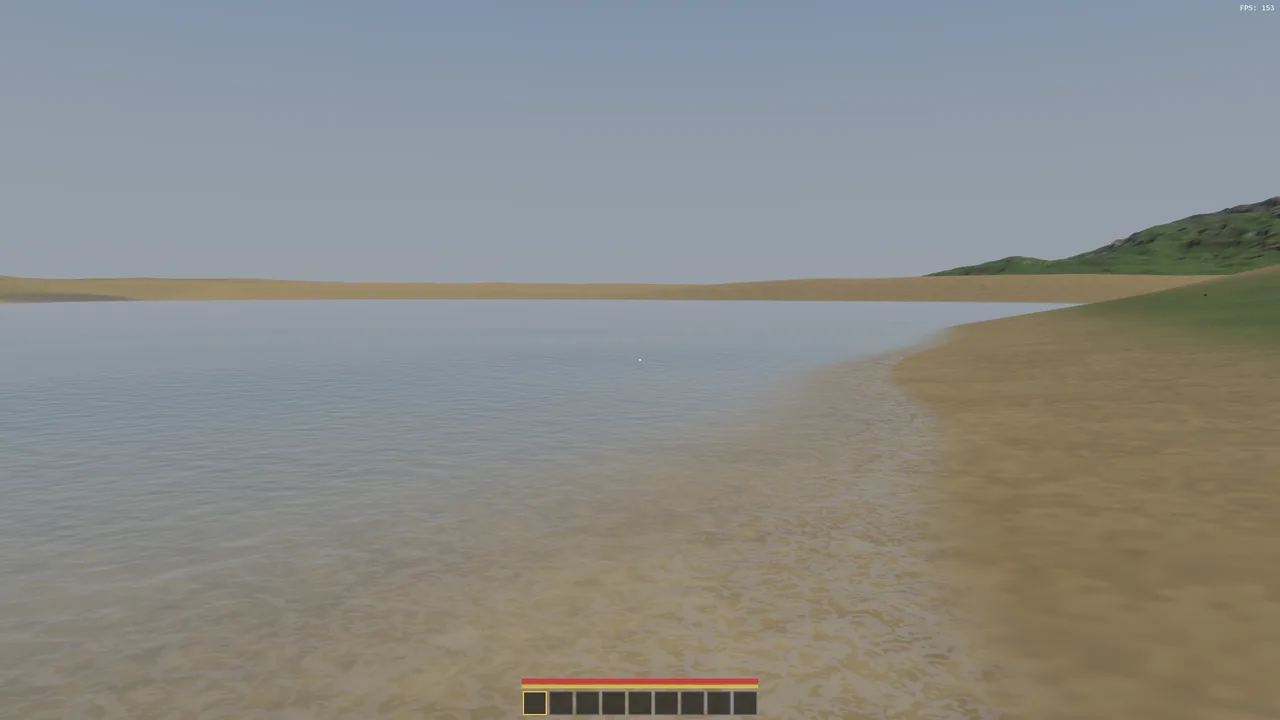
It reflects the real sky instead of a flat gray, and it has rolling waves, ripples, rain rings when it storms and foam where it meets the shore.
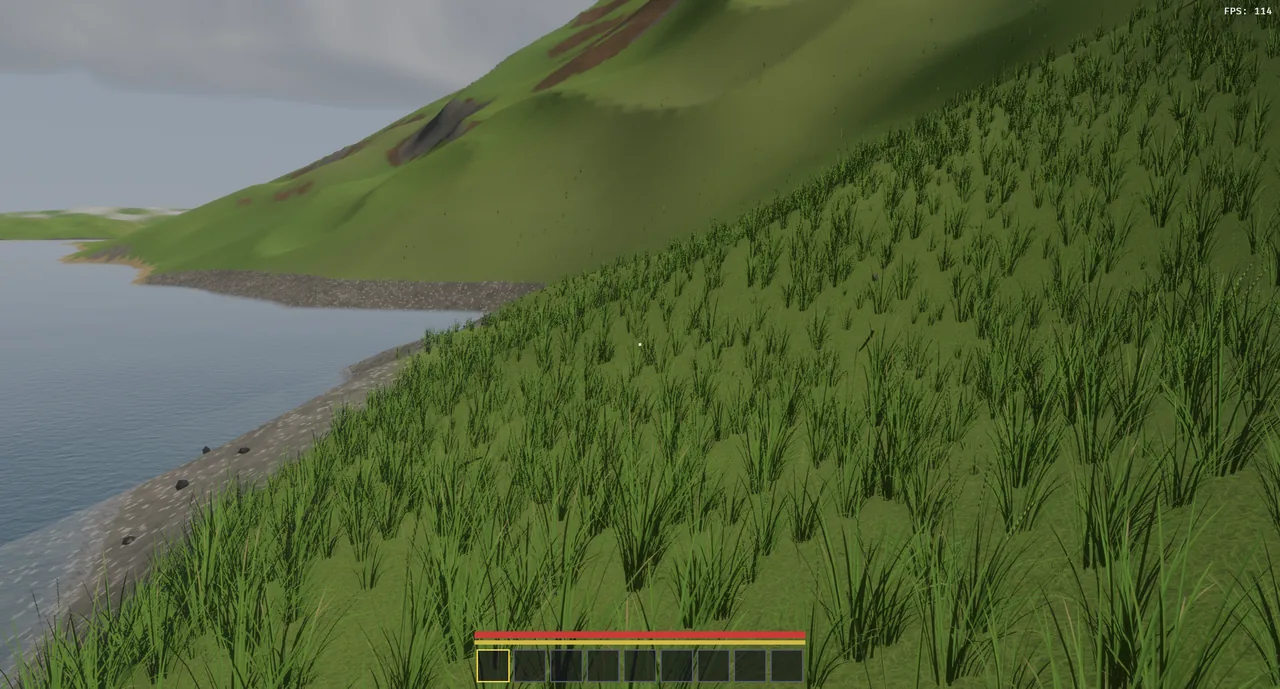
It comes in Low, Medium and High quality, and it costs about the same as the old water did.
The ground and the grass
Ground textures now blend by height, so where grass meets dirt or rock the edge looks like the materials meeting instead of a smear along the terrain mesh. Steep slopes and crater walls no longer streak.
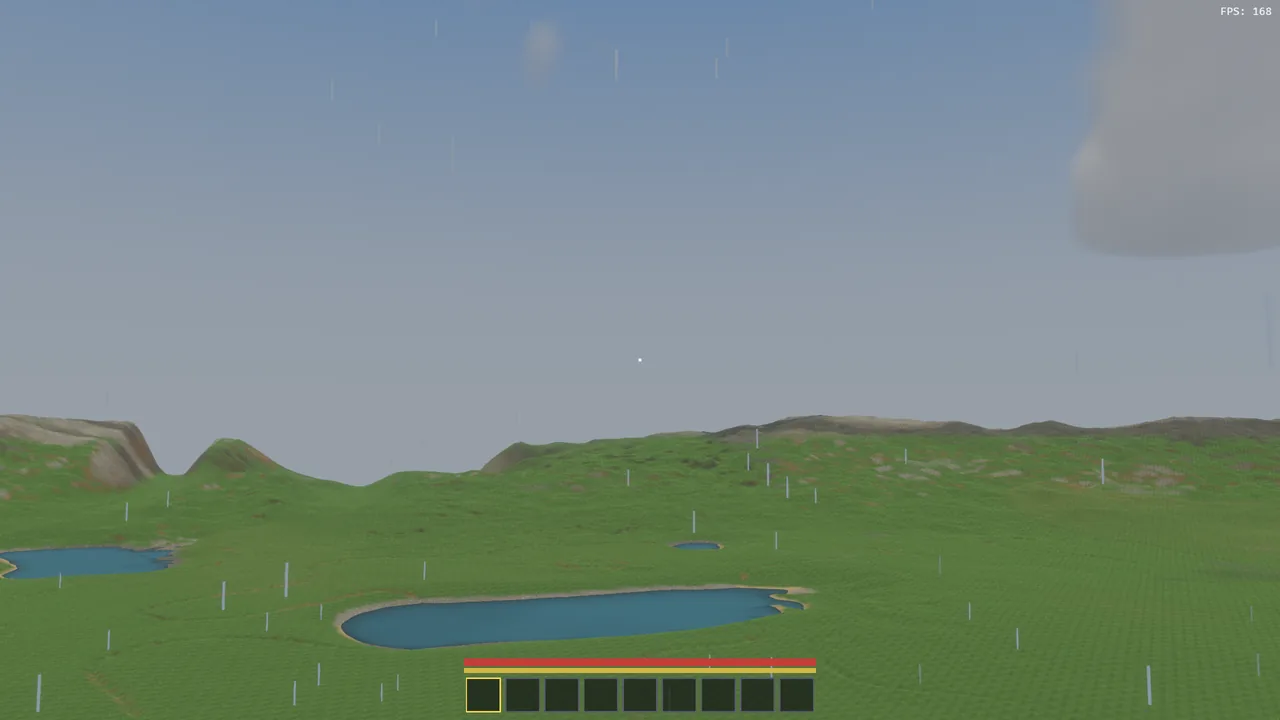
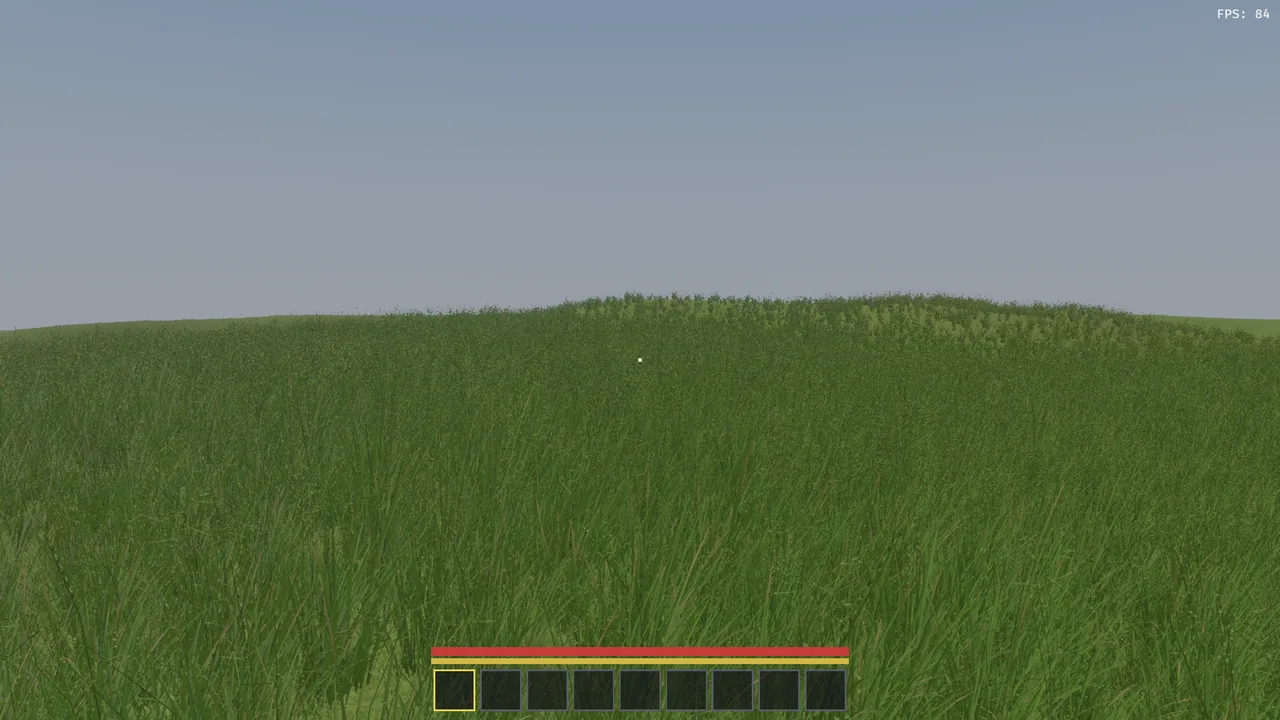
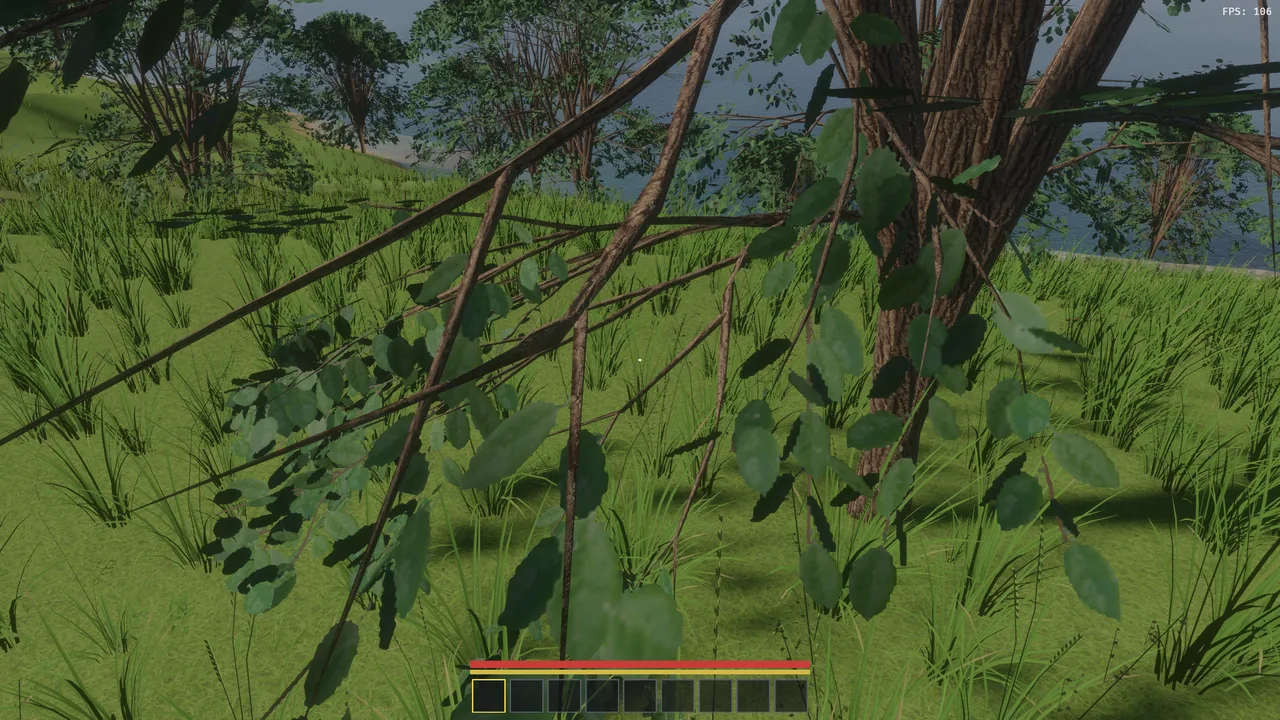
Grass is back, and it is a lot more than it was. Every clump is modeled in Blender: short turf, bunch grass and tall grass with seed heads, plus dandelions with leaves, flowers and seed clocks. The graphics card decides which clumps to draw each frame, so a meadow can hold over 220,000 clumps and still run well. Under it all, the ground's grass layer is now based on a photo of a real lawn, blended so it never visibly repeats. And the clouds no longer draw over grass blades against the sky.
Trees, for real this time
Last devlog ended with trees starting over "and over, and over". They started over one more time. The procedural tree generator has been removed entirely, and trees are modeled by hand in Blender instead.
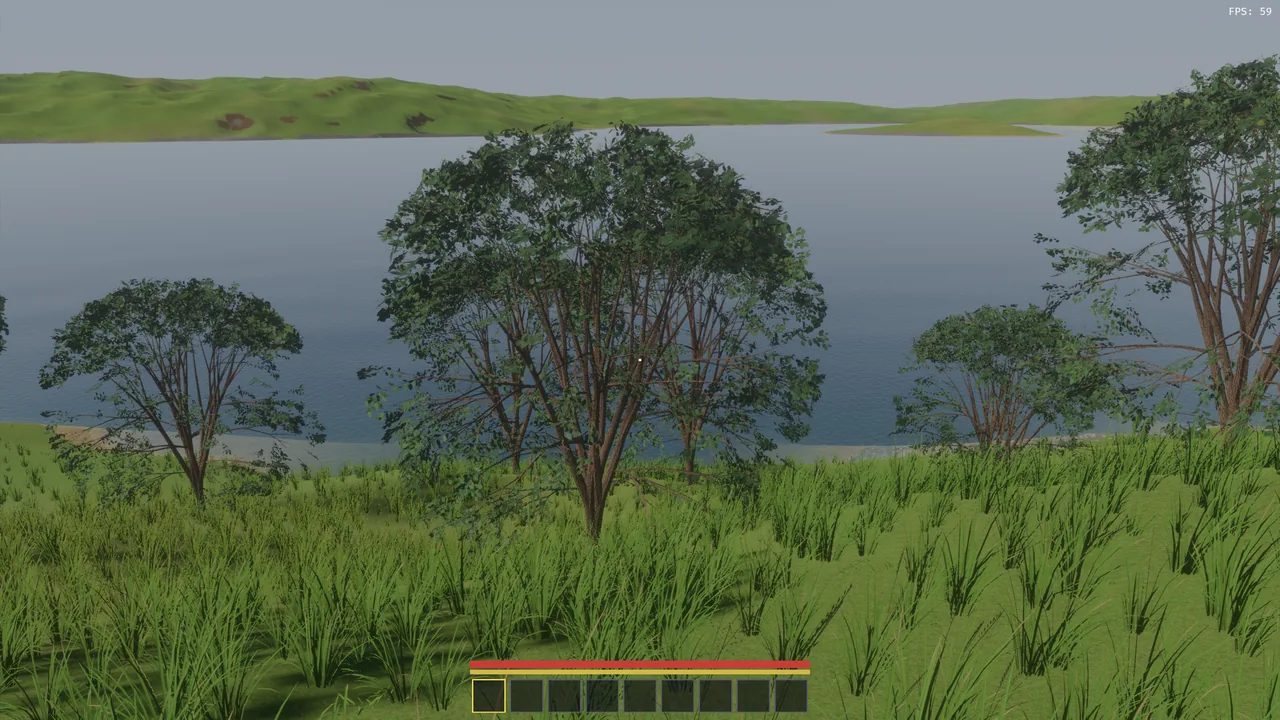
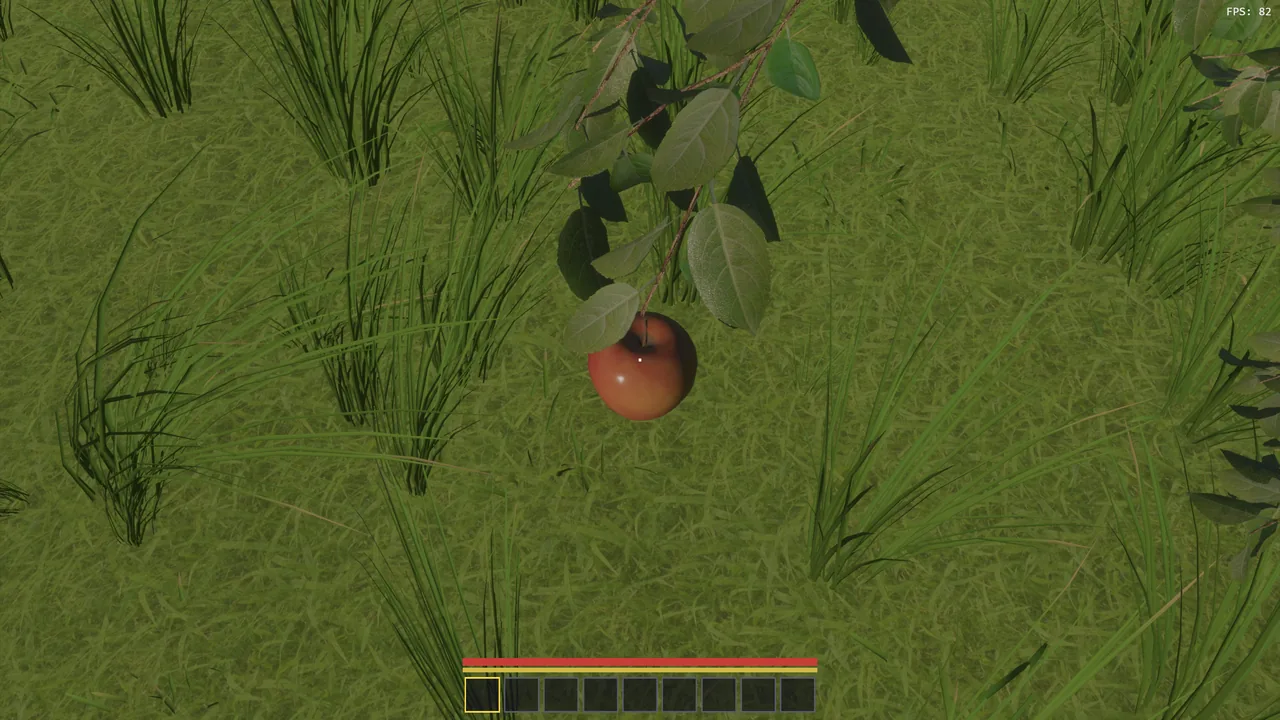
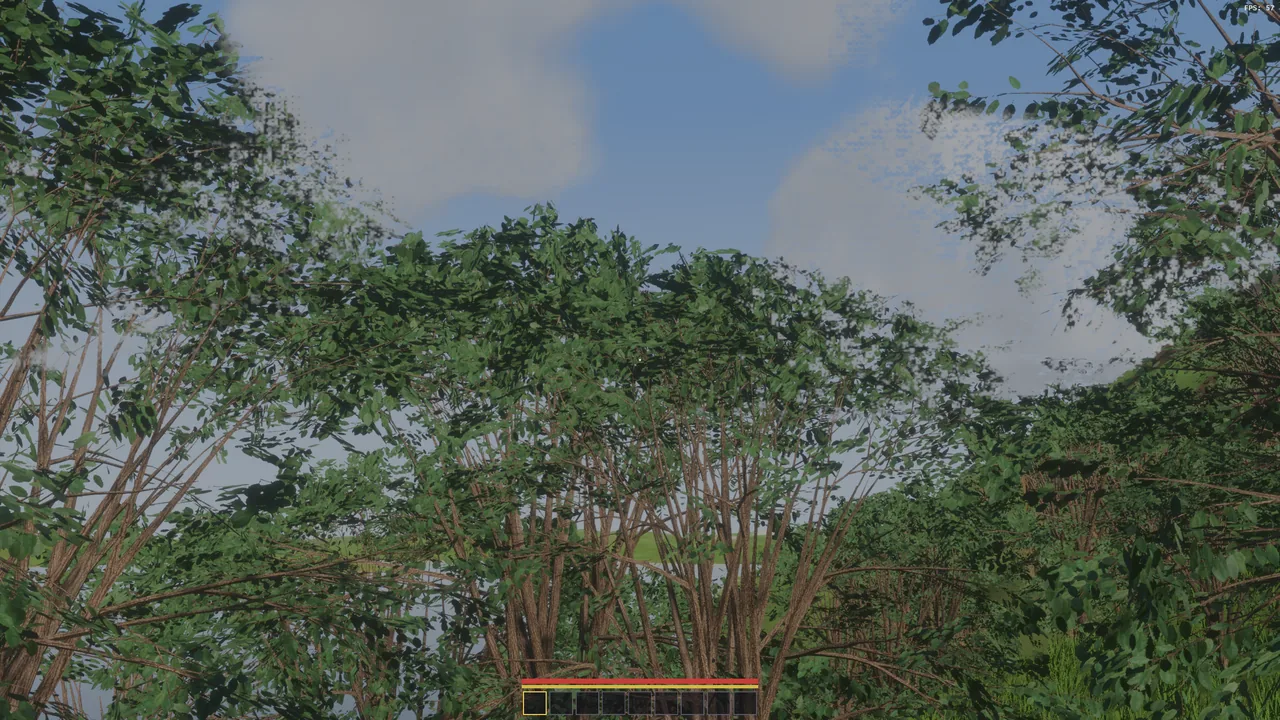
The first one is in: an apple tree. I sculpted the tree, and Dragonfly9307 made the assets for it. It follows the seasons. It has six looks: green, unripe fruit, ripe fruit, autumn, late autumn and bare, and the world switches between them as the calendar turns. There are ripe, unripe, rotten, bitten and fully eaten apples too.
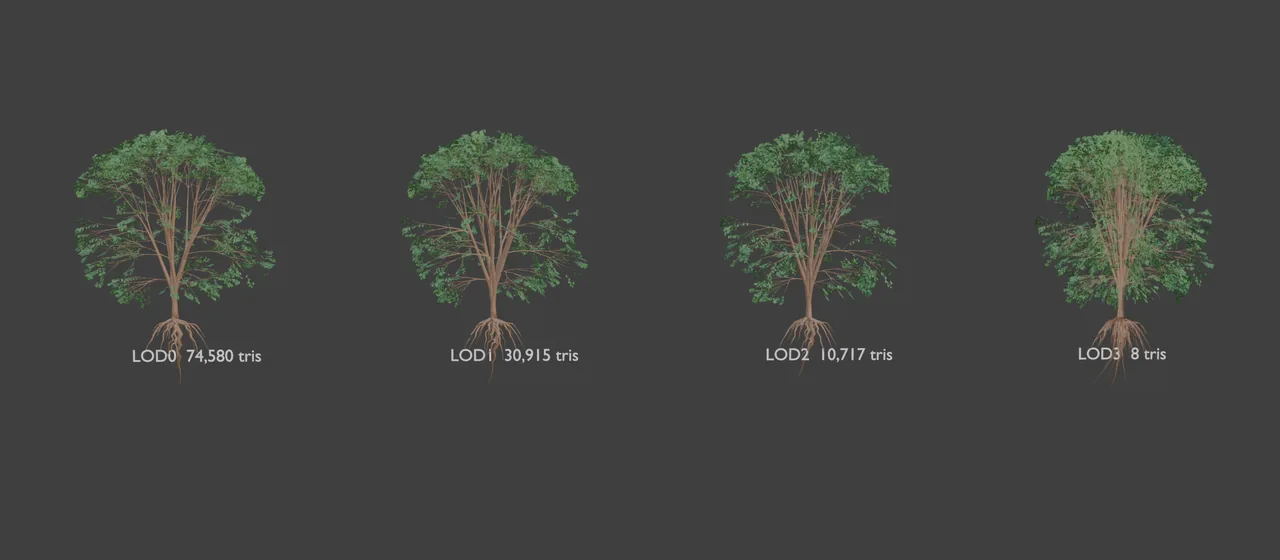
The model as delivered was 1.47 million triangles with over 35,000 individually modeled leaves, far too heavy to put in a forest. So it is baked down into four levels of detail, from about 75,000 triangles up close to a simple flat stand in far away, with the leaves grouped into clusters where they actually hang.
A whole forest of 555 trees now costs under 3 ms. The world grows its own trees again, and chopping, felling, stumps and logs all work on them.
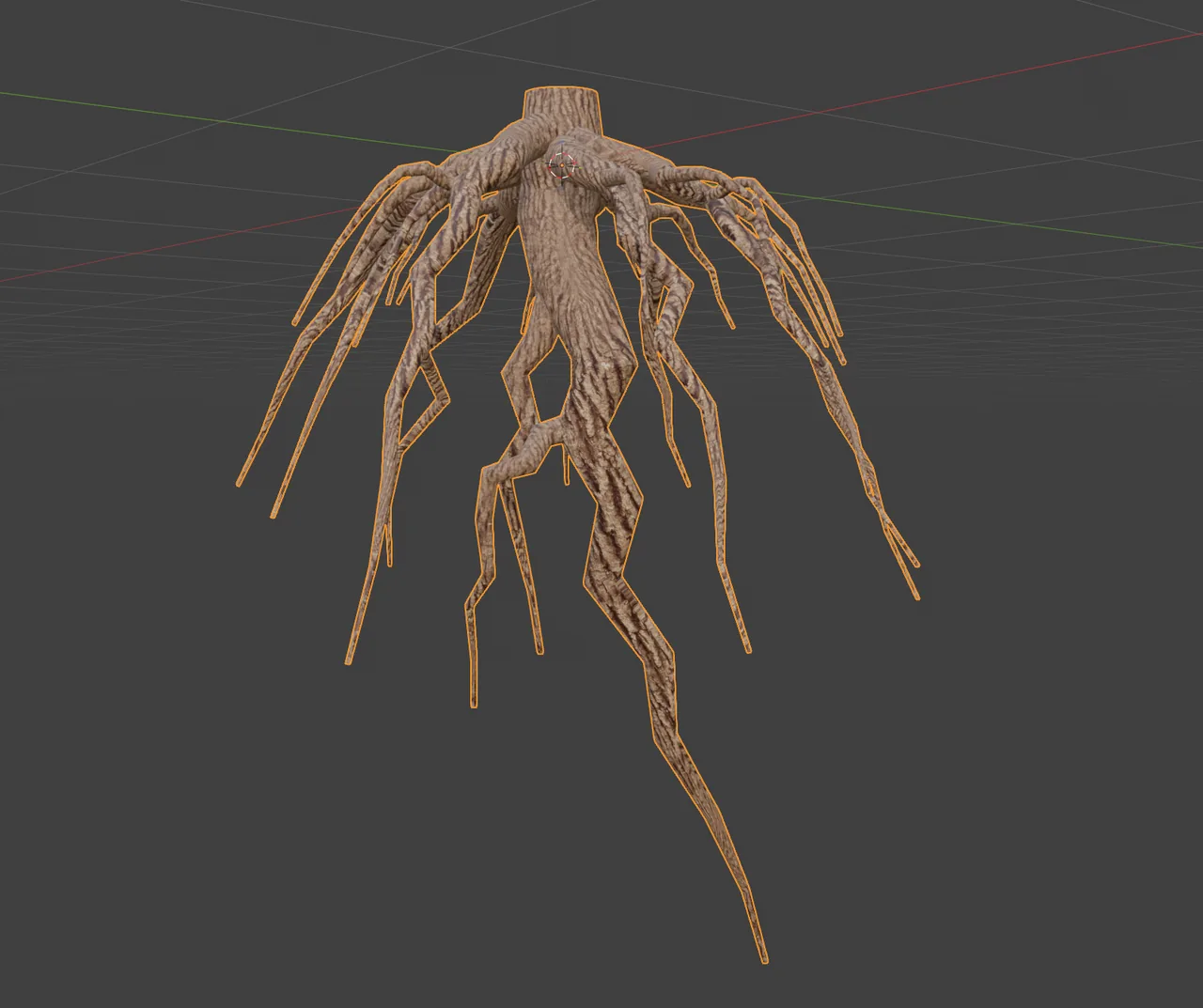
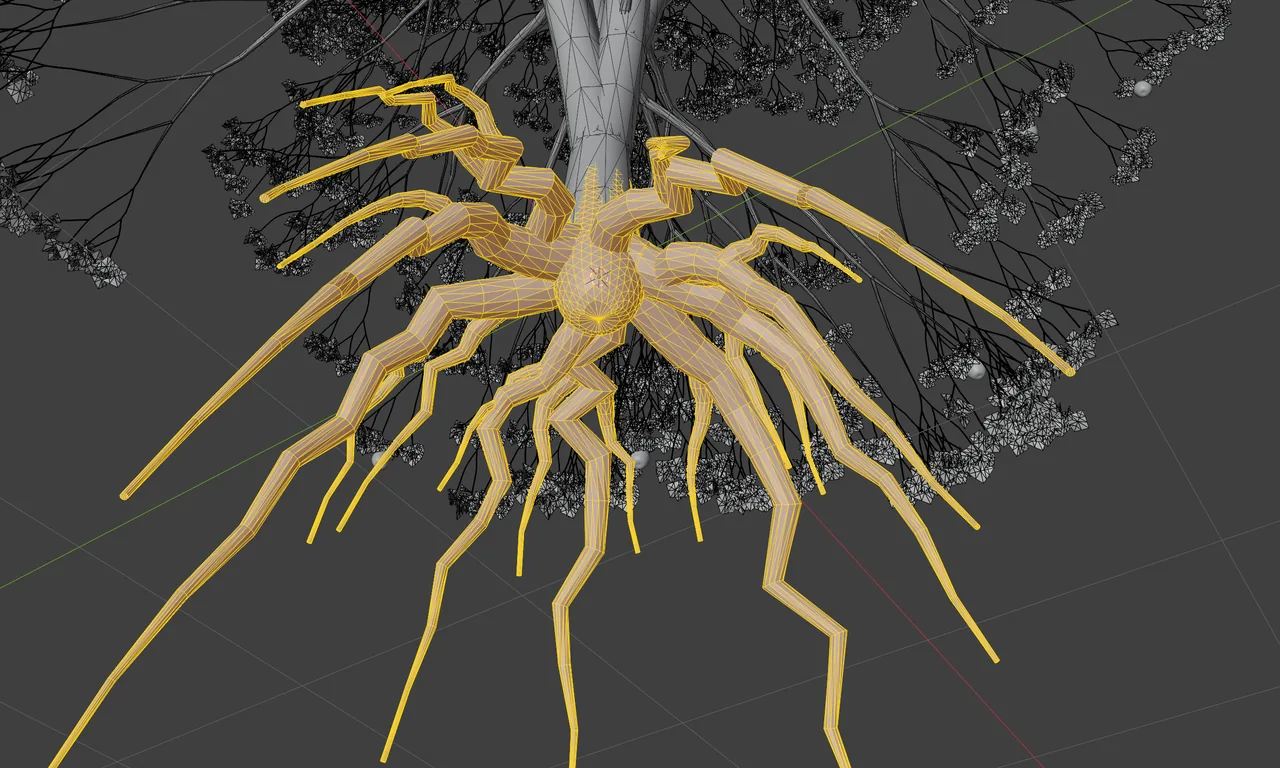
The roots are a work in progress too.
The Shell Emitter, in game
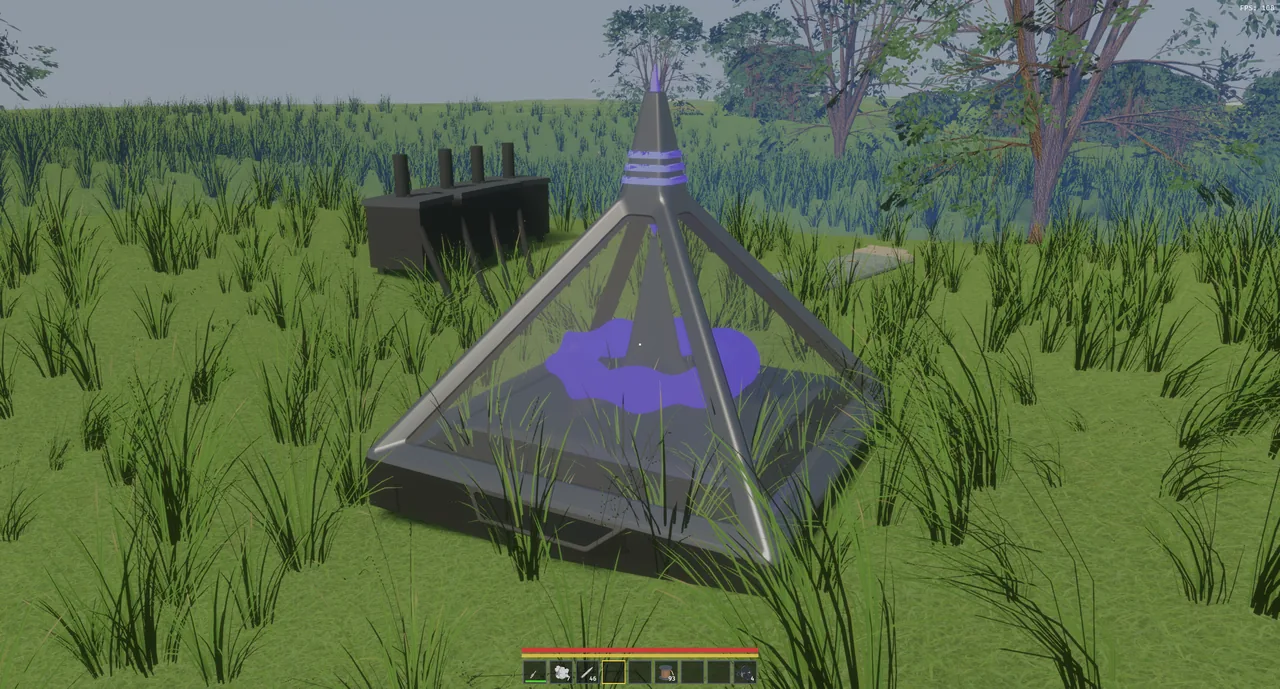
The Shell Emitter from last devlog is placeable and working now. Power it and it plays its start up animation, then its core pulses red while the barrier holds. Cut the power and it winds down and goes dark.
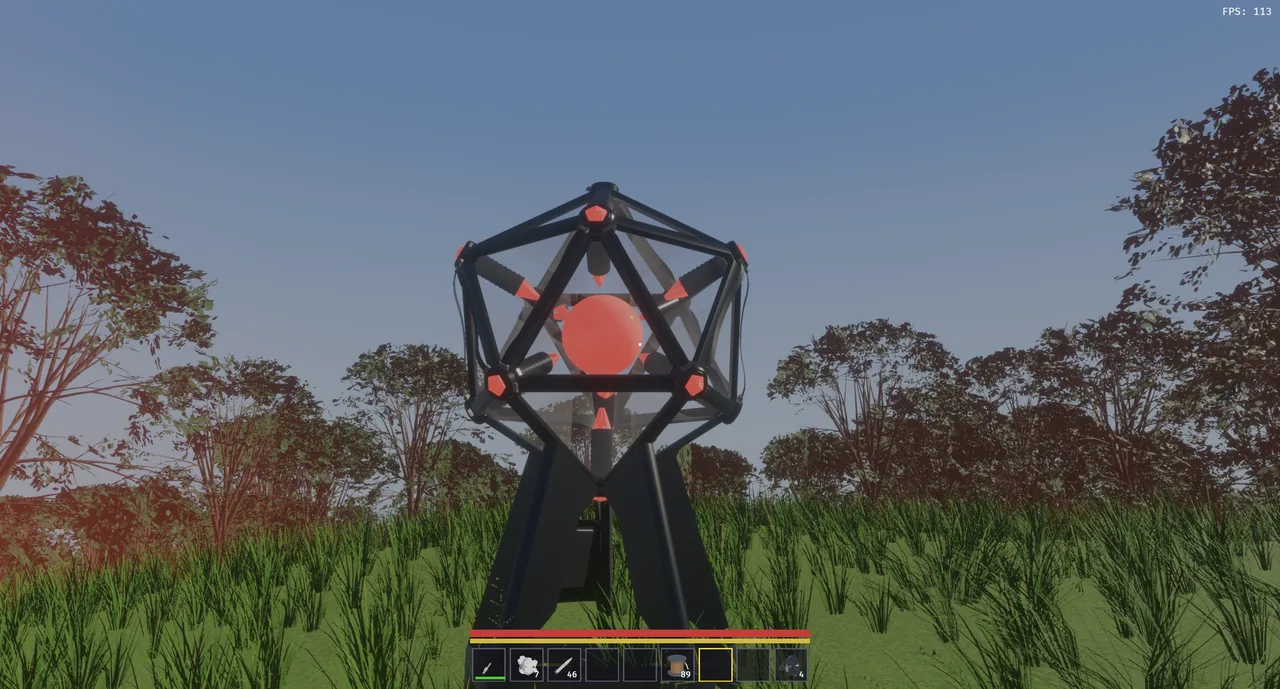
The Logos Drive also got some fixes: every placed drive was secretly being drawn twice, which is where its stray glow with no power came from, and its idle animation was sitting frozen for four seconds out of every five. Both are fixed, and its ring light now follows the field.
Held items and dropped models
Anything you held used to lose detail the further you walked from the center of the world. Kilometers out, small details like vent holes turned into jagged blobs that crawled as you moved. Held items are now drawn from a fixed point, so they look the same everywhere. Models with nested parts also dropped to the ground in pieces, and the bow's arrow slid off the string when you dropped it. Both fixed.
What else we have decided
A lot more design got settled this fortnight, and this is where things are headed:
- Damage types. Sharp weapons cause bleeding that gets worse with every hit. Patching up stops the bleeding but does not heal you. Hard armor plates counter sharp damage, while blunt weapons stun and concuss instead. Each player's health and strength matter, so landing more hits is not a guaranteed win.
- Body sizes. Height and build will be adjustable in character creation, and your hitbox will follow your body and armor.
- Crafting runs one way. Raw materials become components, components become machines. Destroying something gives back a small amount of salvage, not the parts that went into it.
Next up is more trees and foliage, the Scroll, and getting ready for Steam and itch.io. Thank you to everyone who has already preordered.