These are finished enough to play. They were built in order, each one leaning on the
one before it.
A destructible world
Built
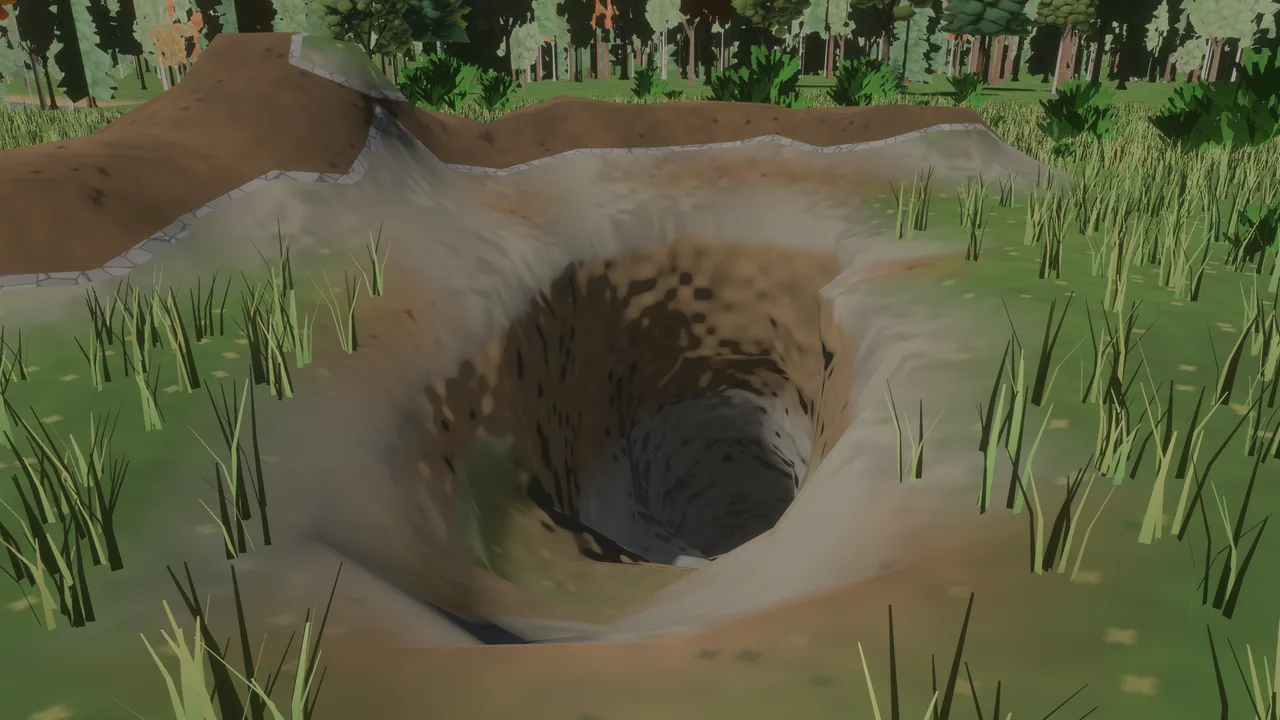
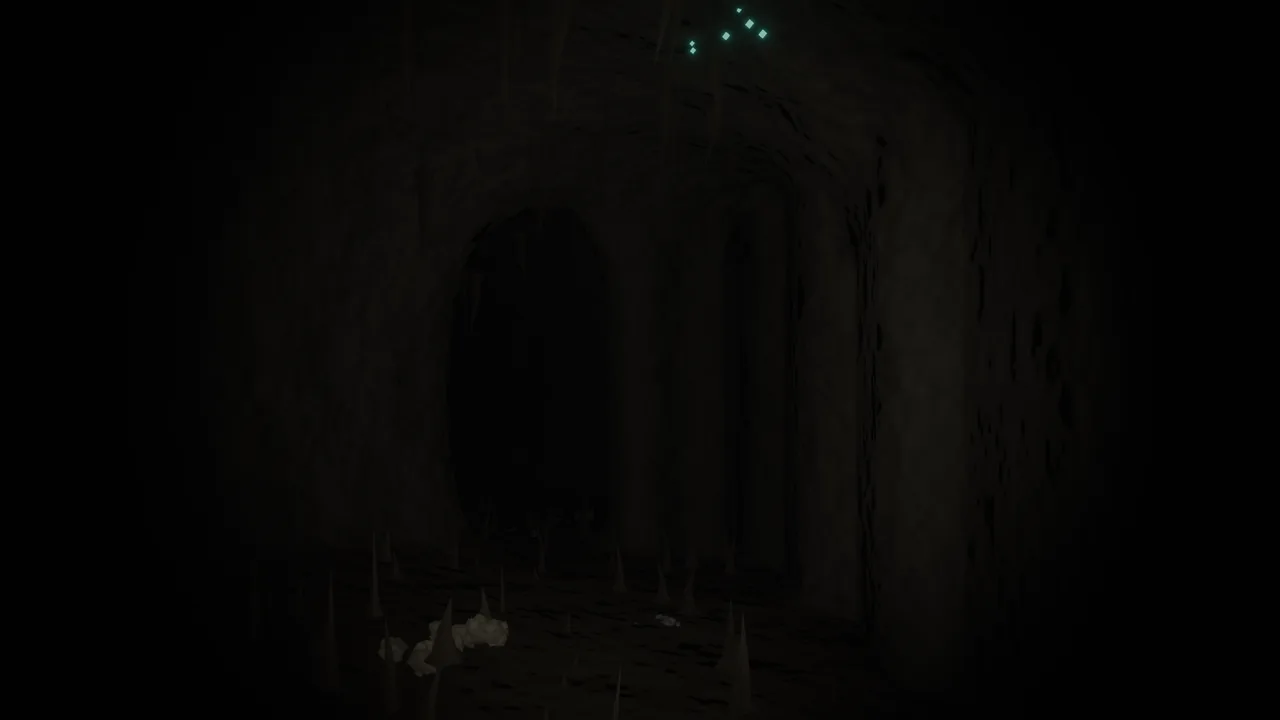
The ground is a solid volume, not a surface. Dig into it with a tool or blast a hole
in it with a launcher, anywhere, and the hole stays. Underneath it there are caves in
three depth tiers, ore in six bands, rivers that cut channels through whatever they
cross, and one sea. You can see about six kilometers.
Starting with nothing
Built
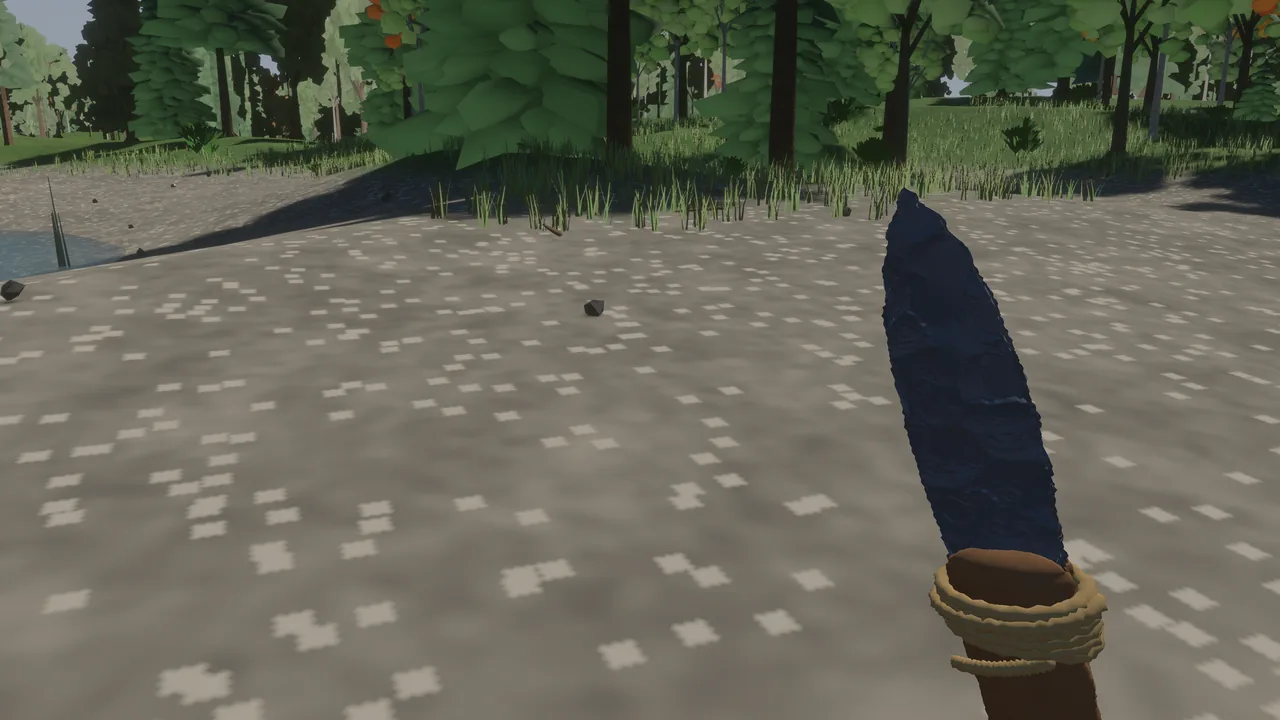
You spawn with an empty inventory. Flint, sticks and plant fiber come off the ground,
and flint knapped against a rock gives you shards and fragments. Those become a knife,
then rope, then a hatchet. Four tool tiers follow: flint, stone, cast iron, steel.
Flint cannot mine anything. The stone tier is the first that can, so the first pickaxe
is a thing you work up to rather than a thing you are handed.
Building
Built
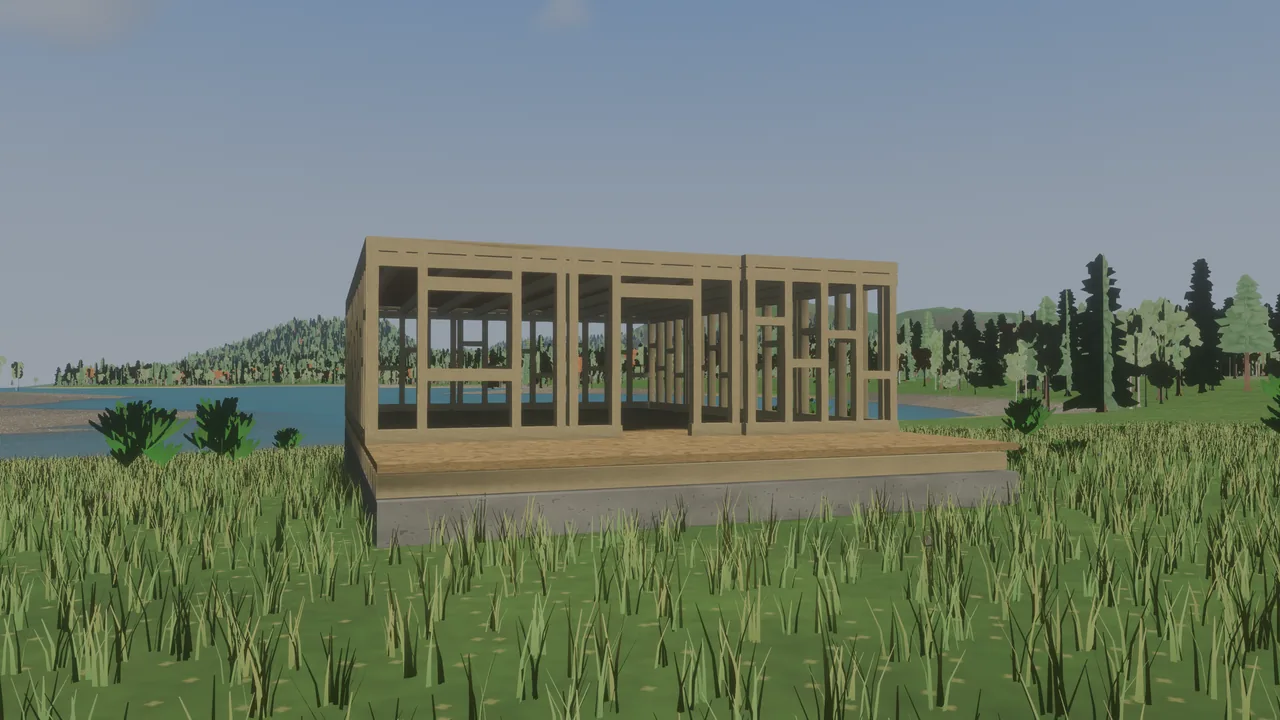
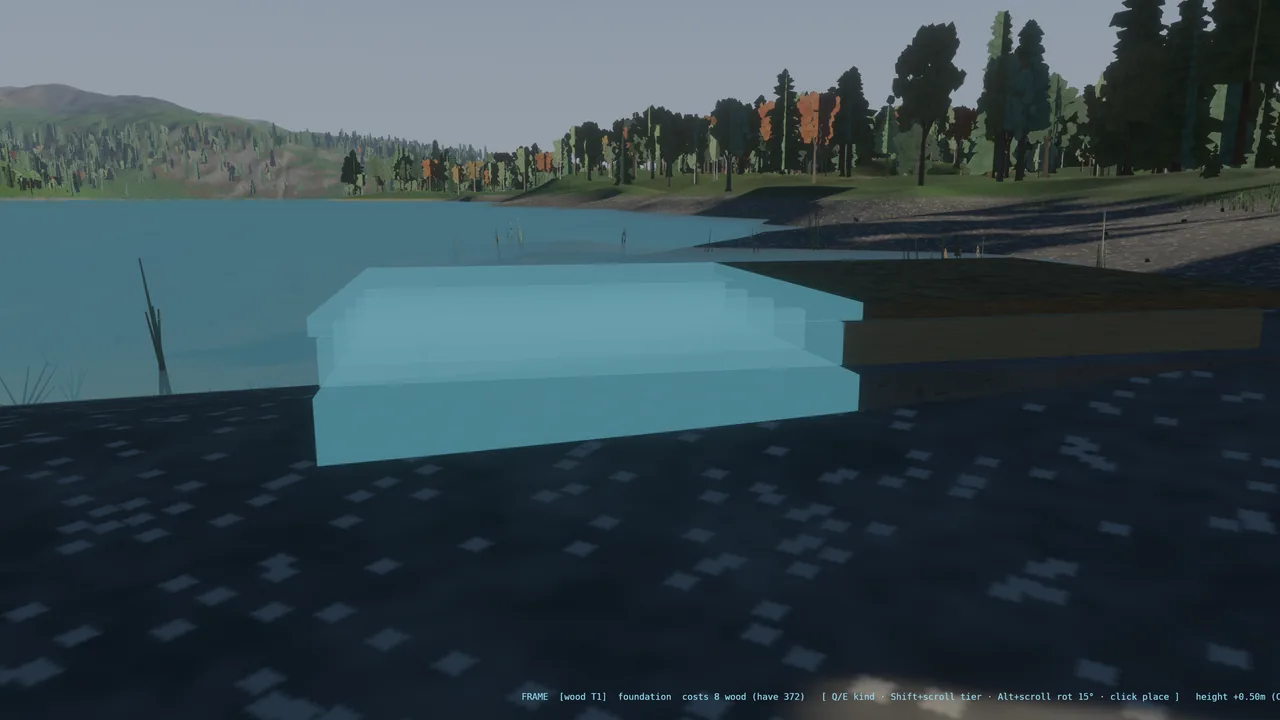
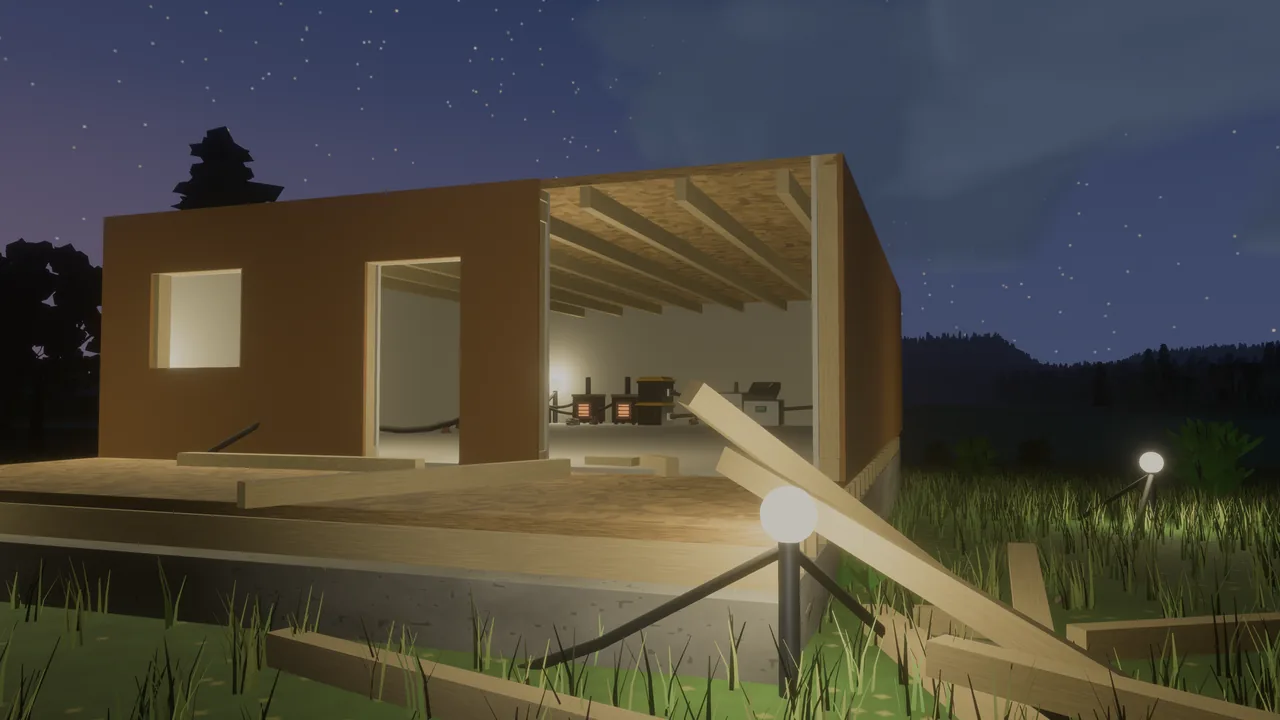
Foundations, walls, floors, roofs, stairs and ladders on a 4 meter grid, picked from a
build menu. They snap to sockets on each other and sit on a stability graph, so whether
a span holds is a real question rather than a decoration. Walls come in five shapes,
full, half, outer corner, inner corner and curved, and doorways, windows, hatches and
skylights are cut into a piece rather than being pieces of their own.
Every piece is a frame and one wall. Five frame tiers go from wood up through rebar,
steel and composite, and fourteen wall materials cover them, from brick and stone to
concrete, glass and metal plate. Health adds together and four resistances, fire,
weather, impact and melee, average between the frame and the wall, so no pairing is
strictly best. Every material gives off an electromagnetic signature a scanner can
read, and five wall modules change what a wall does, from disguising it to shielding it.
A crowbar takes a piece apart and gives back everything that went into it, and repairs
what is damaged. Something blown up is wreckage, and gives back far less. A
construction drone, flown from a powered station, builds where you cannot reach while
your body waits where you left it.
Power, machines, fluids and logistics
Built
Power runs on cable you place. A grid is whatever your cable actually connects, so
keeping two circuits apart is something you build rather than something you toggle.
Cable comes in three tiers, and a grid carries only as much as its thinnest wire, so
one light cable in a heavy run caps the whole thing. At the top end, the Shell Emitter
projects a force field that stops players, blasts and missiles alike, draws more power
the bigger you make it, and drops if the grid fails.
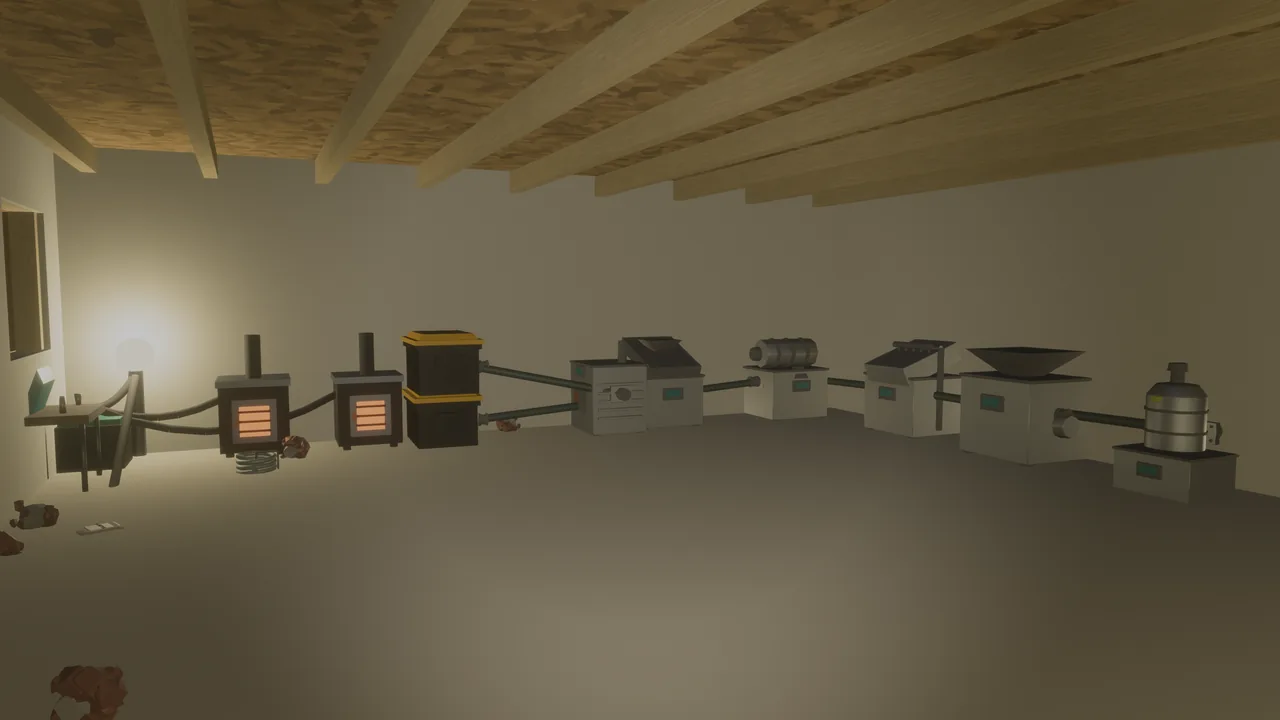
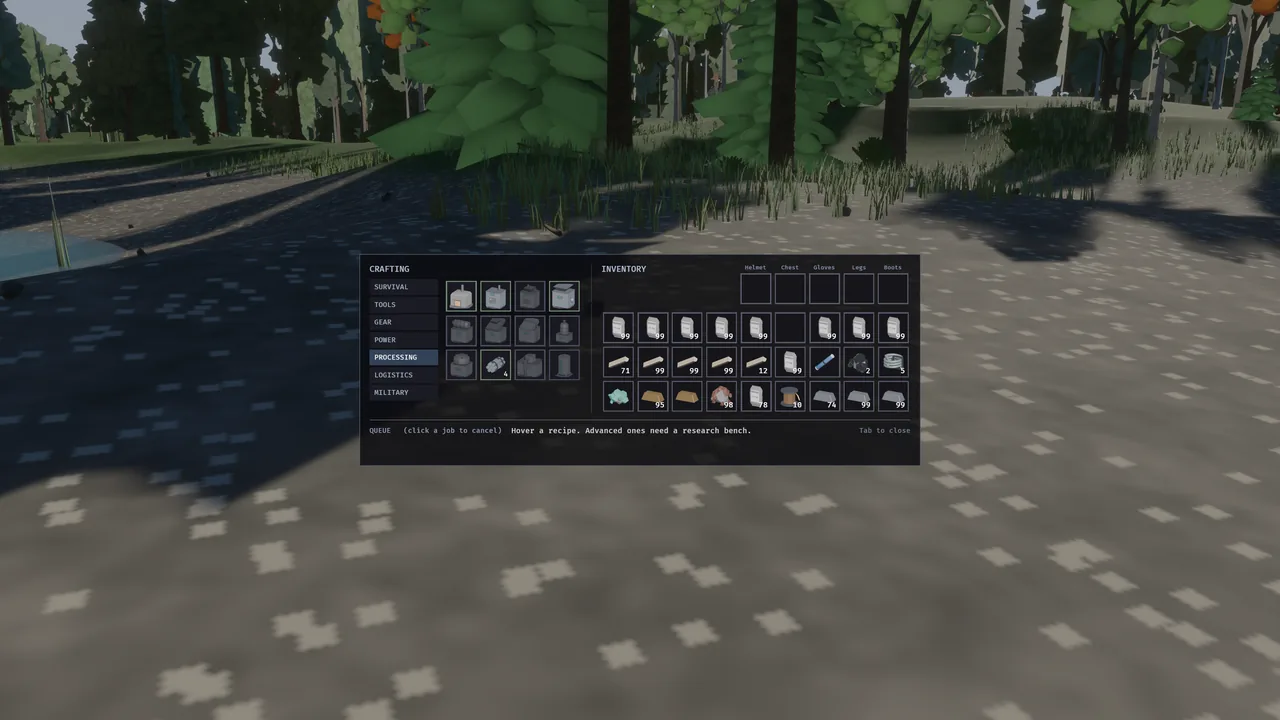
Refining ore is a chain, and each rung of it is gated by something you did not have
yet. A furnace alone gets you one ingot per ore. Adding a crusher doubles it, a
pulverizer and sifter take it to three, and a washer and dissolution vat take it to
four, which means finding water and then making acid. Pipes move the fluids and
pneumatic tubes move the items, routed in three dimensions because a base here is a
dug volume rather than a factory floor.
Light that behaves
Built
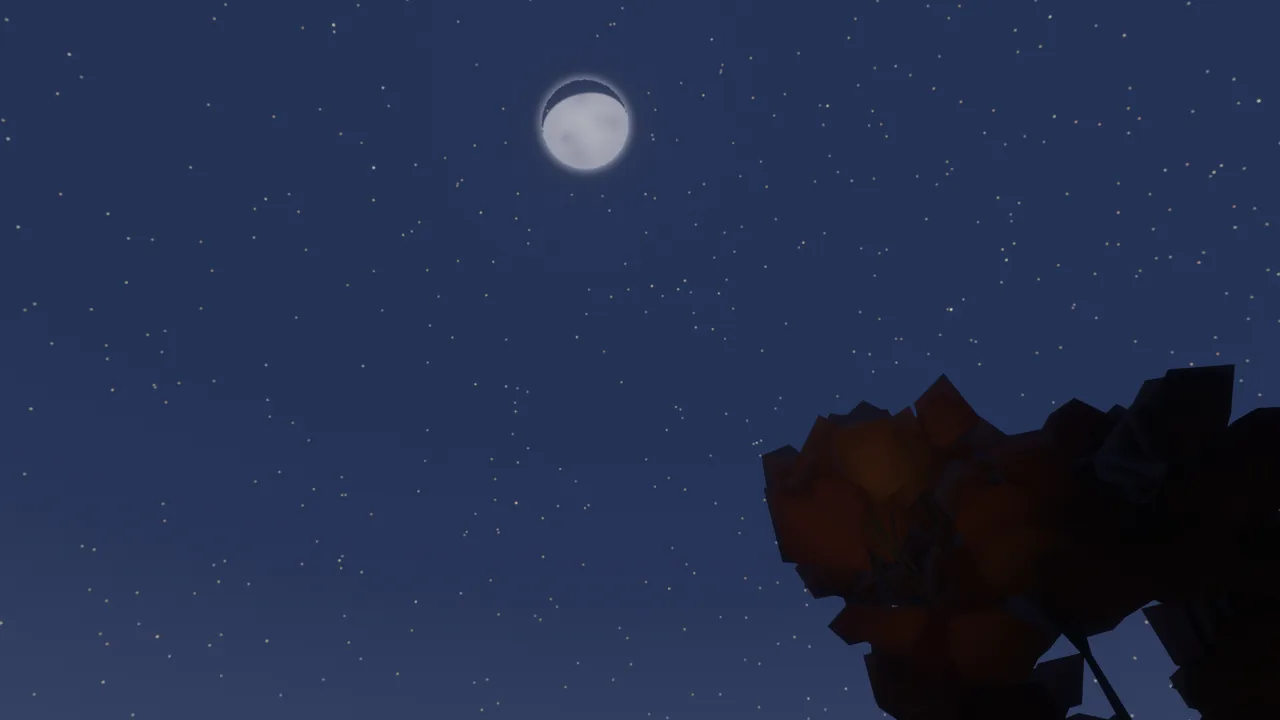
Day and night, with the moon on a real phase cycle, so its shape, its light and how
bright the night is all move together. Clouds are volumetric and the sky lights metal
by reflection instead of painting it flat gray.
After dark and underground, held things are lit only by real lights. Nothing fills
them in, which is why your headlamp matters and why underground is genuinely dark.
Sky, seasons and weather
Built
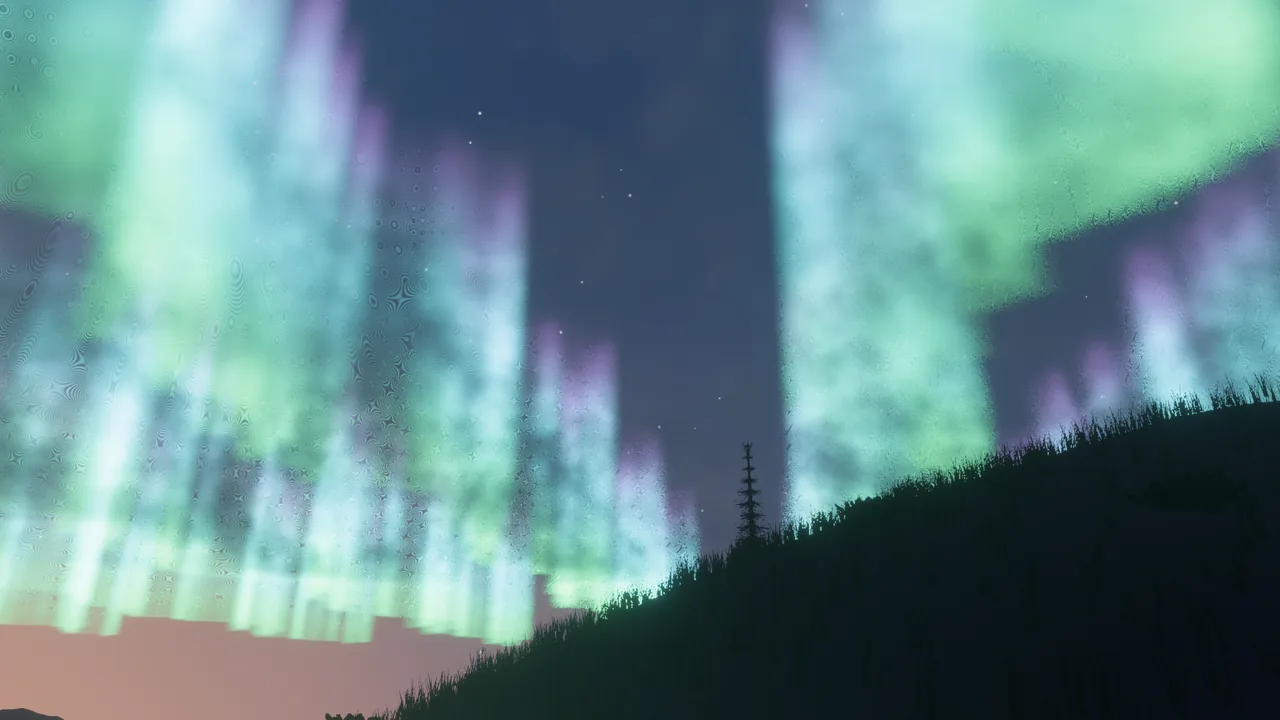
The world has poles and latitude, and two hemispheres with opposite seasons on a real
calendar, while still wrapping around with no edge. The sun
follows your latitude and the date, so day length and polar day and night fall out of
it. The stars are a real catalog that turns with the season, the planets wander on
real orbits, and eclipses and meteor showers arrive on their dates.
Weather is a place: storms are somewhere and you can walk into them, and every peer
sees the same sky because it is worked out from the world, not sent. Snow has a real
depth you wade through, frozen water holds your weight, and the snowline moves with
the season.
Worlds, saves and settings
Built
A main menu, multiple worlds, autosave, graphics settings with a render scale, an
audio mixer with a level and a mute per channel, and keybinds you can rebind and that
stay rebound. The parts nobody mentions until they are missing. Press M for a map that
fills in as you explore and stays dark where you have not been; share a spot and it
drops coordinates into chat that anyone can click.
Multiplayer and servers
Built
A server is a headless instance that hosts a scenario. It owns the authoritative world
and the players on it. A scenario is rule data and does not run; a server runs and does
not decide the rules. Single player loads the same scenario with no server anywhere.
Today
There are two ways to run one: the game binary with a flag, or a separate server
binary that links no client at all. It owns the world, settles melee itself, persists
the save, and corrects clients rather than throwing them around. Every player is a
signed in account, and the server confirms it with steadfall.com before letting them
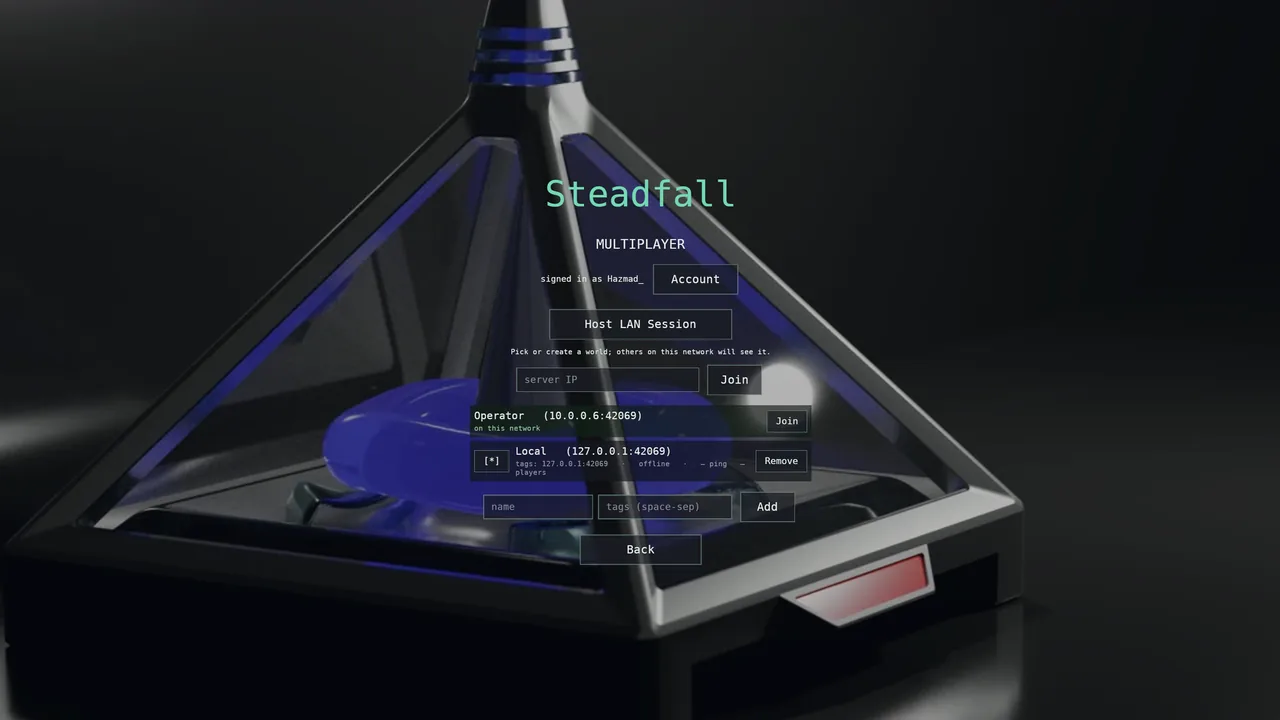
in. It is found on the local network, it can kick, ban and unban, it can name trusted
players as operators, and it loads a scenario script that can refuse what a player
asks to do. Voice chat is proximity based, on push to talk.
Terrain and exploration
Built
Procedurally generated, and geologically accurate rather than geographically
accurate: layers of minerals and sediment, caves, crevices, rivers, lakes, oceans and
forest, in a world with no wall around it.
Today
One planet, one sea, caves in three depth tiers, rivers that cut channels, and ore
in six depth bands. The world is a 32 kilometer loop: it has no wall and no edge you
can walk to, but it does have a far side, so keep going in one direction and you come
back to where you started. The strata are real: twelve rocks in four classes, stacked
per column, and every ore names which rocks may host it, so what you find depends on
what you are standing in. A prospecting pick reports what is really buried under your
feet, including nothing.
Modding
Built
Mods that are safe and easy to make: a model and a short text file, not a code
project. Adding to the game should not mean building the game.
Today
A mod is a model file plus a short text file, read off disk when the game starts. It
can add a held item, something you place, a character, or a replacement body, with no
rebuild and no code. Either mod root is read at launch, so installing one is
dropping two files in a folder.
Crafting
Built
Everything you make comes from a recipe, out of your hands early and off a bench once
the work outgrows them. Past full automation some items are too complex to be made by
hand at all and have to be manufactured by machines.
Crafting runs one way. Raw material is refined into components, and components are
assembled into machines. A finished machine is never broken back down into its parts,
and wreckage gives back only a small share of what went in.
Today
Crafting runs as a background queue with three durations and a cap of eight jobs.
One workstation, the research bench, works by proximity: it halves the basic times
and gates the recipes that need it.
Trees, grass and water
Partial
Forests you can fell, mill and plant. Many species, each with its own leaf, seasonal
color, fruit and roots, and eventually farming: cuttings, grafting and saplings.
Today
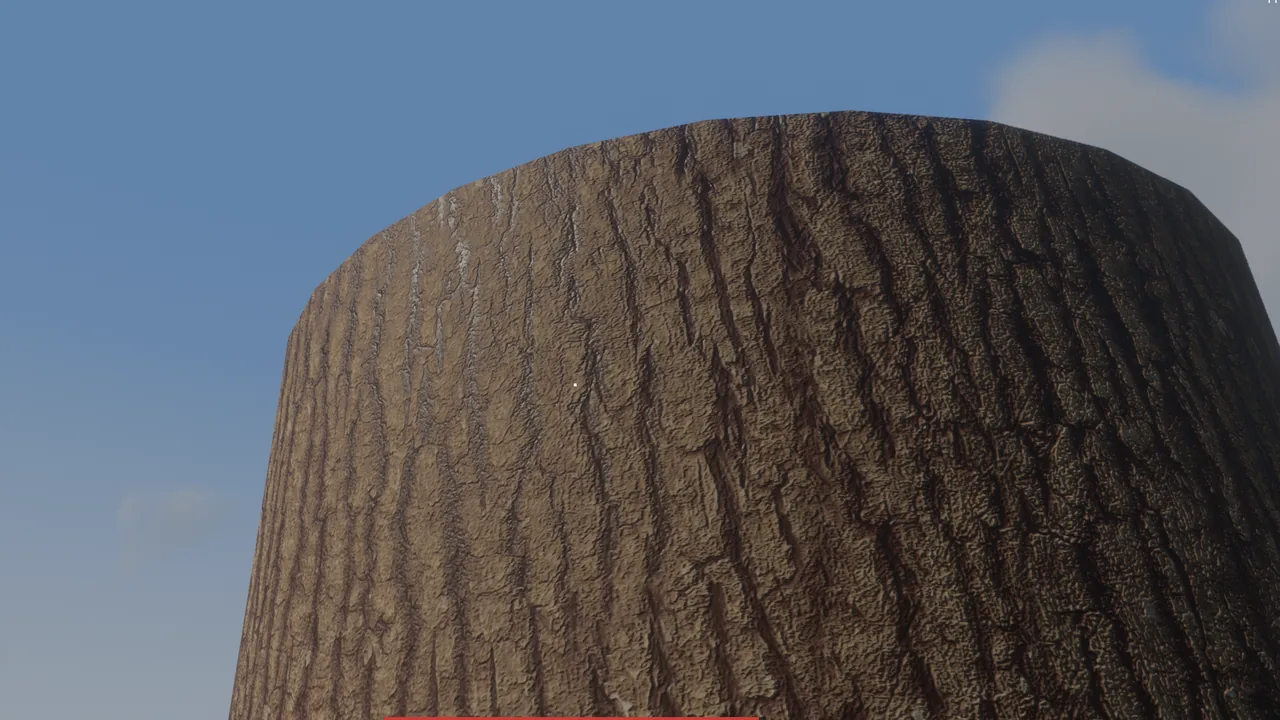
Apple trees grow across the world, and chopping one topples it and drops wood. Each
tree draws in less detail the further away it is, so a forest stays cheap. Meadows of
grass and dandelions are drawn by the graphics card, sway in the wind and part where
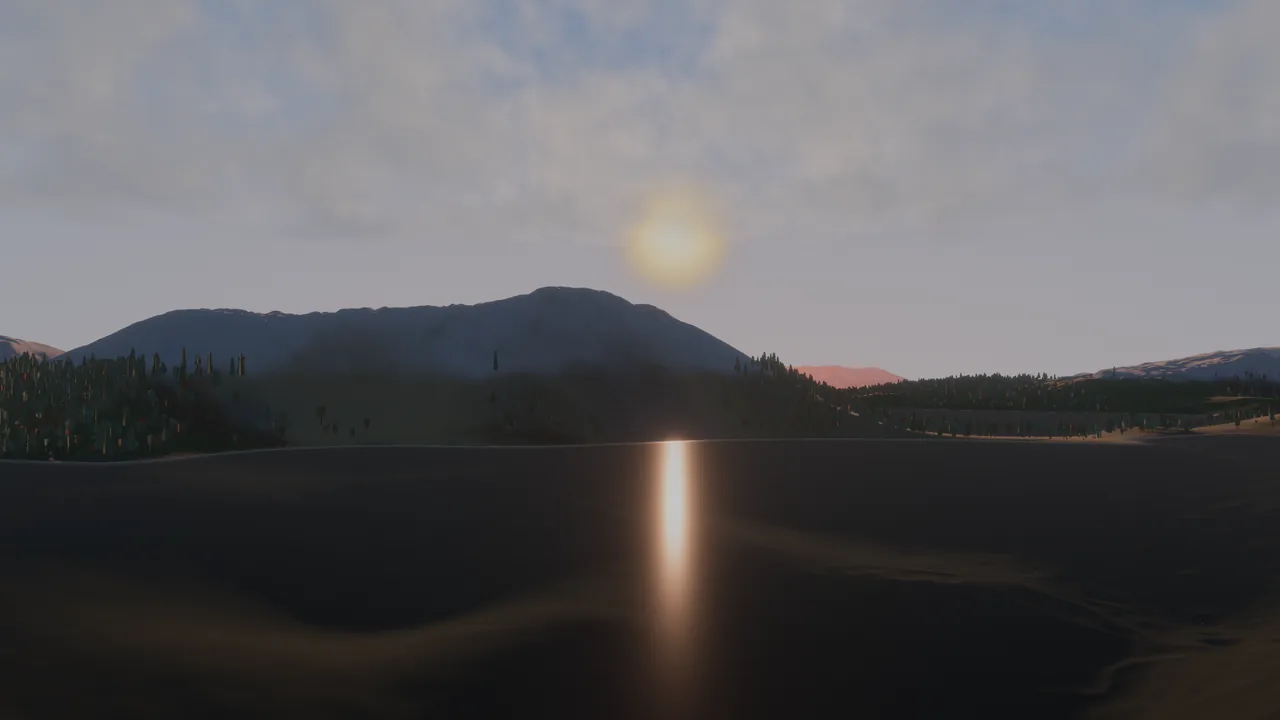
you walk. Water has waves, foam, ripples and rain rings, and reflects the real sky.
One tree species so far; more trees, flowers and plants are being modeled.
Phones and controllers
Partial
One game on every screen, so a player at a desk and a player on a phone can share a
server.
Today
The game builds, installs and plays on Android, with a movement stick, a look area and
touch for the inventory and building. Gamepads work on desktop and on Android. Linux,
Windows and Android all grow the same world from the same seed. No phone build has
been released yet.
Scenarios
Partial
A world's rules should come from a scenario file, used as a preset and editable by
anyone. Three ship as baselines: Raiding, Operators against Operators, in multiplayer.
Survival, against the world, alone or with friends. Sandbox, creative,
alone or with friends.
A scenario controls the flags that make a world what it is: which technologies are
unlocked, what you start with, what you are allowed to place and break. The point is
that a scenario nobody shipped counts just as much as the three above. Homesteading,
for instance: you start with some tools and a little cash, you buy chunks of property,
you buy supplies from a store, and you can only build and dig on land you own.
Today
The scripting half is in: a server loads a scenario script that can refuse what a
player asks to do or make something happen, and every request passes through it, in
single player too. The rule data is not: a world stores two settings, sandbox and
cheats, and only cheats changes anything. There is no property, no currency, and
nothing in the game that distinguishes playing against the world from playing
against people.
Environment
Partial
Fully destructible and interactable, with building materials, objects, decorations
and furniture, and modded content on top. Somewhere to call home.
Today
The destruction and the building ladder are real and shipped. Furniture and
decoration are not: the only hand placed objects that are not machines are a storage
tote, a research bench and a sleeping bag.
The tech tree
Partial
Very deep, from the stone age to science fiction. From bows and arrows to better tools,
metal smelting, electricity, guns, machines and automation, basic rocket propulsion and
space travel, lasers, robots and explosives, out to the far end: full modular power
armor, energy weapons, force fields, light speed travel, and off world exploration and
research.
Guns are modular. The receiver and barrel decide how refined a gun is, and the parts
around them change: bolt a stock onto a break action, or saw a barrel down for a
lighter, less accurate gun and a handful of scrap. More refined receivers take more
kinds of attachment. Mismatched parts work, with the drawbacks to match.
Today
There is no tech tree, no research and no unlock system. Progression is a side effect
of what things cost to make and which tool tier you are on. Built weapons stop at
melee, the bow, two grenade launchers and an intercontinental missile. No firearms and
no energy weapons.
Survival and training
Not built
Stay fed, warm, well rested and trained, and your player thrives: runs faster, attacks
faster and harder, and carries a heavier loadout without slowing down. Nobody spends
points on stats. A body is trained automatically by staying healthy and staying
challenged, so the way you play is the way you train: stay warm and quiet and hunt
unseen, or chase your prey down and use noise to scare threats away. Animals avoid
people and fruit grows in season, so staying healthy is work.
Today
Health and stamina, and a sprint that winds you. No hunger, warmth, sleep or
training.
Combat
Partial
A fight is not a sum of weapon damage against armor. Sharp weapons cause bleeding
that gets worse with every hit, and patching up stops the bleeding without healing you.
Hard armor plates stop blades and do far less against blunt weapons, which stun and
concuss instead. The most hits do not guarantee the win, and a fight is a real risk
for both sides.
Primitive weapons and modular guns give way to energy weapons, explosives and far
worse, and what you can build, you can be on the wrong end of.
Today
The server settles melee, armor reduces damage, and the weapons run from melee and
the bow to grenade launchers and a missile. No bleeding, stuns or damage types
yet.
Characters and clothing
Partial
You create and name characters, and play them in scenarios, modeling and fine tuning
each one exactly how you like. Clothing is set in the main menu and is purely cosmetic:
zero protection, zero benefit. You unlock the clothing we model for free, through
playtime and achievements, and players can also create, publish and sell their own
designs for real money. Armor overrides clothing, except modular power armor with
hologram modules.
You have an account display name and an avatar name, and servers and scenarios decide
how each is shown, which suits players who want strict roleplay rules. Stature is
yours to set, and your hitbox follows your body and your armor.
Today
One generated body, the same for everyone. Five equipment slots exist and exactly one
item fills any of them. Your name is your account's display name. No character
select, no creation screen and no clothing layer.
Anticheat
Partial
In Raiding, everyone should know their opponents are playing fairly. The intent is that
the server never takes a client's word for anything, and that a caught cheater is
banned by account.
Today
The server decides what happens and never takes a client's word for what it is
holding. Every request is checked for reach and spent from a per player budget, every
player is an account the server confirms, and a ban holds against that account.
Movement is not validated yet; it is safe only because the server runs it.
The Scroll
Not built
The one thing you start with. The Scroll is a multitool, guide and communication
device carrying a snapshot of all of human knowledge, survival advice and objectives
to follow, so you are never lost on what you can do, but you still have to decide what
you should do. Worn on the left hand so the right stays free, it is also the
flashlight, the scanner and the camera, and it puts itself away when you pick up
something that takes two hands.
The first thing you play is a training simulation on the Scroll: a guided run in a
small patch of wilderness that teaches gathering, a first camp and first tools. Finish
it, or skip it, and the world proper opens.
Today
None of it. A headlamp stands in for the light.
Operators and agents
Not built
You are not your character. You are the operator behind them, with a roster of agents
you spend one at a time on a server until each one dies. Death sends you back to the
menu and keeps that agent out until the wipe, but your base, your stash and your bed
stay put. Losing a fight costs you a life, not the campaign, and running out of agents
locks you out until the world resets.
The lore behind it, a parallel Earth humans never settled, reached because the real
one is losing to something nobody has seen clearly, is not locked in. It exists to
explain why the official scenarios wipe and reset, not as a story you have to follow.
Today
None of it. Death puts you back at your bed with your inventory intact.
Wildlife
Not built
Animals to hunt and to be hunted by. Each yields its own materials for its own recipes,
and some are a genuine danger to an early settlement.
Today
No creature exists, and there is no animal intelligence or pathfinding anywhere in
the game. The only moving things that are not players are fireflies and shooting
stars, and neither of them can touch you.
Space travel
Not built
Every planet in the solar system reachable, out to the Kuiper Belt, which nothing
crosses. Each has its own hazards, its own advantages and its own materials, and
reaching the further ones means harvesting and researching what you find on the nearer
ones. They are the far end of the tree: most of the game is played on Earth.
Today
Nothing you can reach. The missile is a suborbital weapon on a scripted arc. The
planets are up there on real orbits, wandering against the stars, and a sextant reads
your latitude off the sky.